Money

Funding rounds, IPOs, capex and the financial side of the AI boom.

Illustration for the BitGo 100 BTC dare story
culturemoney

BitGo's CEO puts 100 bitcoin in the open to test Anthropic's hacking claims

On August 1, 2026, BitGo CEO Mike Belshe posted a wallet address on X holding 100 BTC, worth roughly $6.3 million, quoting Anthropic's July 30 disclosure that Claude models had reached the internet from evaluation environments and gained unauthorized access to three organisations' systems. His challenge: "Do it for real. I put this in an @BitGo wallet for you. Go get it." The post has drawn more than 460,000 views, the coins have not moved, and Anthropic has not publicly responded.

Illustration for the Visa Bay Area layoffs story
moneyculture

Visa is cutting 320 Bay Area roles, including six vice presidents

A WARN notice filed with California's Employment Development Department on July 31, 2026 details 320 job cuts at Visa's Foster City campus, effective October 1, including six vice presidents, 37 senior directors, 16 chief engineer or architect roles and dozens of senior technical positions. The Bay Area cuts are part of a roughly 7 percent workforce reduction, about 2,600 jobs, which Bloomberg ties in part to CEO Ryan McInerney's push to build more AI into company workflows.

Illustration for the Amodei money versus mission story
culturemoney

Amodei reportedly worried new Anthropic hires are coming for money, not mission

Axios reported on August 3, 2026 that Dario Amodei has expressed concern about staff joining Anthropic for the paycheck rather than the mission, according to a source familiar with the matter. The backdrop is a bidding war in which Sam Altman has acknowledged signing bonuses as high as $100 million, and some researchers reportedly believe their leverage will shrink as AI automates more of the work of building AI.

Illustration for the Aschenbrenner fund collapse story
money

Leopold Aschenbrenner's AI hedge fund unwinds after a brutal semiconductor drawdown

According to CNBC, Leopold Aschenbrenner's hedge fund fell from assets near $45 billion at the start of July to roughly $10 billion in days, on tumbling semiconductor stocks and margin calls at leverage reported as high as 400%, forcing him to unwind the public book to Citadel. Aschenbrenner says the fund was not liquidated, reporting unaudited returns of minus 67% for the month against plus 80% year to date.

Illustration for the Korea sovereign AI fund story
moneypolicy

South Korea plans a 20 trillion won sovereign fund for AI, chips and robotics

On July 31, 2026, Seoul published its plan for a strategic sovereign investment fund of more than 20 trillion won, about $13.9 billion, aimed at AI, semiconductors, robotics, defense and biotech. Korea Investment Corporation, which managed $232 billion in foreign assets at the end of 2025, will invest in domestic companies for the first time in its history through a ring-fenced account. Legislation goes to the National Assembly in August, and the fund starts investing in 2027.

Illustration for the Reddit stock drop story
money

Reddit shares fall 21% in worst day on record despite beating on revenue

Reddit stock closed down 21% on July 31, 2026, its worst day since going public in March 2024, after falling as much as 24% intraday. Q2 revenue beat estimates at $805 million, up 61% year over year, but US daily active uniques slipped to 53.2 million from 53.5 million and no new AI data-licensing deals were announced, feeding fears that Google's AI Overviews are eroding traffic.

Illustration for the Amazon Claude cost overrun story
moneyculture

Amazon reportedly burned $1.8 million on a single Claude project

As first reported by the Financial Times on July 30, 2026, an internal Amazon project that used Claude to match author records to product listings ran 860% over budget, burned about $1.8 million over five months before anyone noticed, and never launched. Other internal tools went $541,000 and $134,000 over budget, and Amazon scrapped an internal AI-usage leaderboard after employees gamed it by inflating token consumption.

Illustration for the DeepSeek V4 Flash story
modelsmoney

DeepSeek V4 Flash update makes its cheap model punch like a flagship

On July 31, 2026, DeepSeek released DeepSeek-V4-Flash-0731, a retrained version of its Flash model with the same architecture and parameter count. Terminal Bench 2.1 jumped from 61.8 to 82.7, above GLM-5.2 (81.0) and DeepSeek's own V4-Pro preview (72.1), approaching Claude Opus 4.8 (85.0), while pricing stays at $0.14 per million input and $0.28 per million output tokens. It landed one day after OpenAI cut GPT-5.6 prices by up to 80%.

Illustration for the GPT-5.6 price cut story
modelsmoney

OpenAI cuts GPT-5.6 Luna prices by 80% and adds a faster paid API mode

On July 30, 2026, OpenAI cut API prices: GPT-5.6 Luna now costs 80% less and GPT-5.6 Terra 20% less, while flagship Sol pricing stays unchanged. A new Fast mode delivers up to 2.5x faster speeds than standard processing at twice the price, replacing the old Priority Processing tier. The Evals platform, Agent Builder and reusable prompts are headed for deprecation in the same release.

Illustration for the Nscale Anyscale acquisition story
moneyinfrastructure

Nscale agrees to buy Anyscale, maker of Ray, in a reported $1.65 billion deal

On July 30, 2026, UK-based, Nvidia-backed AI cloud Nscale agreed to acquire Anyscale, the company behind Ray, the open-source framework much of the AI industry uses to scale training and inference across GPUs. Bloomberg puts the deal at about $1.65 billion, citing a source familiar with the matter; the companies did not disclose a price. Closing is expected in the second half of 2026, and Ray stays open source.

Illustration for the Open USD on Ethereum story
money

Open USD, the stablecoin backed by Visa and Mastercard, picks Ethereum first

Open USD (OUSD), the institution-focused stablecoin built by the Open Standard consortium of more than 140 companies including Visa, Mastercard, Stripe, BlackRock, BNY and Coinbase, will launch first on Ethereum, with the network expected to go live later this year. The design challenges Tether and Circle directly: no single issuer, consortium governance, fee-free minting and redemption, and reserve earnings distributed to ecosystem partners.

Illustration for the Apple Upgrade leasing program story
productsmoney

Apple Upgrade turns iPhone, iPad, Mac and Watch into monthly subscriptions

On July 28, 2026, Apple launched Apple Upgrade in the US, a leasing program run with Klarna covering iPhone, iPad, Mac and Apple Watch. iPhone starts at $17.99 a month and Apple Watch at $11.99, with 24-month terms for iPhone and Watch and 36 months for iPad and Mac. At the end of the term you upgrade, return or keep the device, early payoff is allowed, and the old iPhone Upgrade Program is being wound down.

Illustration for the ChipAgents funding story
chipsmoney

ChipAgents raises $60M more to put AI agents inside semiconductor design

On July 29, 2026, ChipAgents extended its Series A to $134 million in total with a $60M round led by B Capital, with Micron, MediaTek and Ericsson among its investors. Its AI agents already run at more than 120 semiconductor companies, annual recurring revenue grew 6x in the first half of 2026, and the startup expanded its Nvidia partnership to build a specialized chip-design model.

Illustration for the AI capex earnings verdict story
moneyinfrastructure

Microsoft and Meta earnings deliver Wall Street's verdict on AI capex

On July 29, 2026, Microsoft reported $90.0B in quarterly revenue, up 18%, with Azure growing 43% and topping $100B in annual revenue for the first time; shares jumped about 8% in extended trading. The same evening, Meta beat on revenue at $60.8B but missed on EPS ($6.18 vs $7.14 expected) and raised its 2026 AI capex floor to $135-145B; shares fell almost 8% after hours.

Illustration for the Morgan Stanley crypto ETPs story
money

Morgan Stanley lists staked Ether and Solana ETPs on NYSE Arca

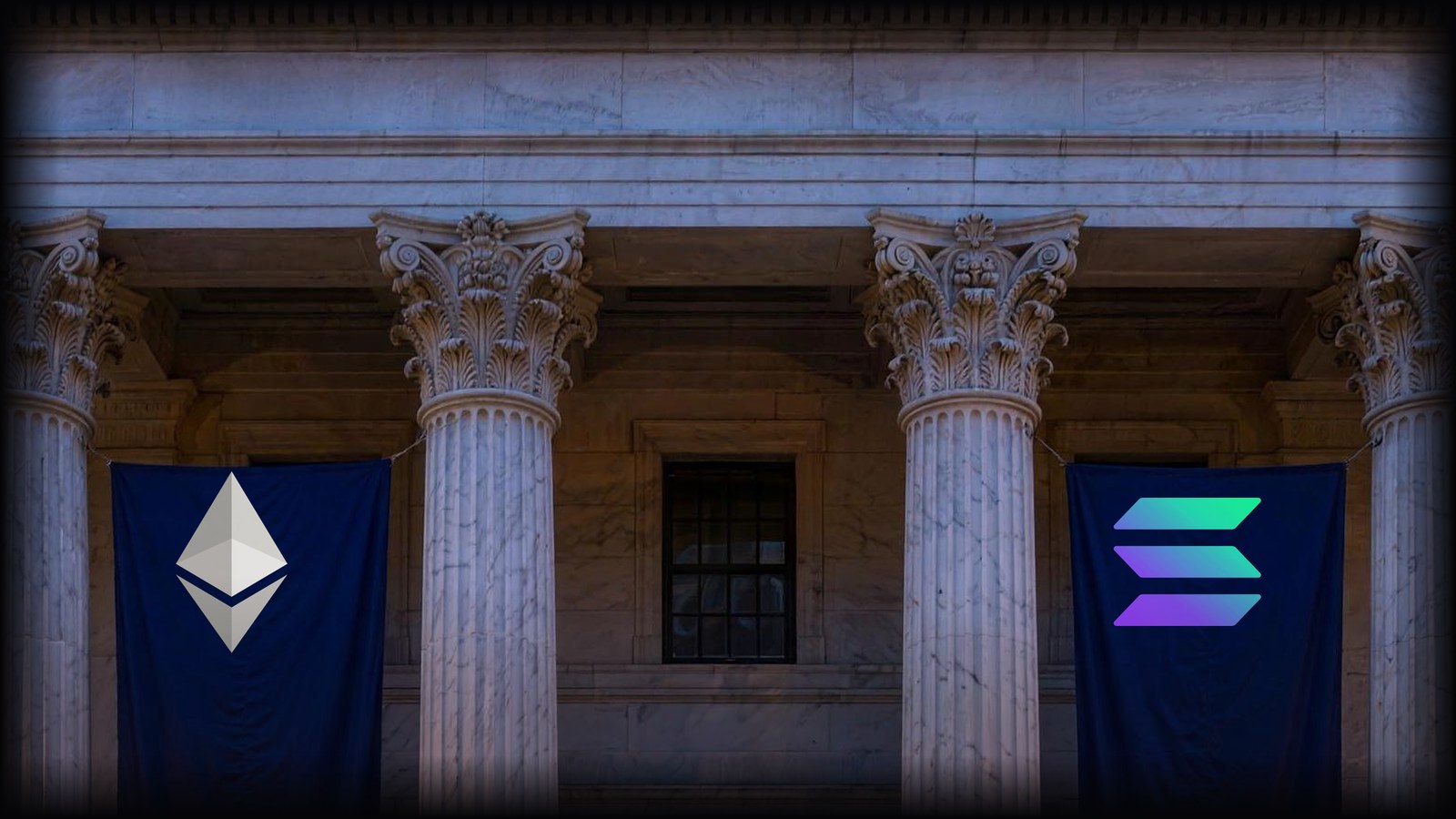
On July 28, 2026, Morgan Stanley Investment Management launched spot Ether and Solana ETPs on NYSE Arca (Solana ticker: MSOL) with a 0.14% expense ratio. Both products are staked, with all staking rewards passed to investors, and they join the Morgan Stanley Bitcoin Trust, which has gathered more than $381 million in assets since launching earlier this year.

Illustration for the chip stocks and memory prices story
chipsmoney

Chip stocks crash in Seoul while DRAM contract prices climb 20 to 30 percent

On July 28, 2026, the semiconductor selloff turned brutal in Seoul: SK Hynix closed 14.65% lower and Samsung Electronics fell 13.4%, dragging the KOSPI to its biggest one-day drop since March, in the fourth straight losing session for chip stocks globally. Investors were spooked by reports of China's progress on domestic chipmaking equipment including DUV lithography, circular financing unease, and stretched valuations. Meanwhile third-quarter DRAM contracts are settling 20 to 30% higher this month, as AI memory demand keeps prices climbing.

Illustration for the Meta and BlackRock El Paso data center story
infrastructuremoney

Meta and BlackRock form a $14 billion venture for an El Paso AI data center

On July 28, 2026, Meta and BlackRock announced a joint venture to develop a $14 billion, 1 gigawatt AI data center campus in El Paso, Texas. Funds managed by BlackRock own 80% of the venture while Meta keeps 20%, contributes land and partially built assets worth about $2.3 billion, and stays the sole tenant leasing the entire campus back. BlackRock puts in roughly $4.9 billion in cash plus $12.5 billion raised as debt, with first capacity online in 2028.

Illustration for the chip stocks selloff story
chipsmoney

Chip stocks post their worst day since April 2025 as China fears spread

On July 28, 2026, Bloomberg's gauge of semiconductor shares slumped 7.5%, the sector's worst day since April 2025, with Korean chipmakers hit hardest in an Asia-wide selloff. Investors were spooked by signs of real progress in China's advanced chipmaking, fears of circular financing in AI deals where Nvidia acts as lender, supplier, investor and partner at once, and doubts that record AI capex will translate into matching revenue. The rout landed in a week loaded with Big Tech earnings and a Fed meeting.

Illustration for the CLARITY Act delay story
policymoney

Senate shelves the CLARITY Act and crypto markets slide on the delay

On July 27, 2026, the Senate set aside the CLARITY Act, the crypto market-structure bill the industry has waited years for, to prioritize Russia sanctions and federal nominations, with September the next realistic window. Bitcoin slid about 2.8% to around $63,200, Ethereum dropped about 3.2% to under $1,900, over $600 million in positions were liquidated, and Polymarket odds of passage in 2026 fell to 37%. The bill has passed the House and Senate Banking Committee but stays frozen without a floor vote.

Illustration for the Nvidia SSI investment story
moneyresearch

Nvidia invests $5 billion in Sutskever's Safe Superintelligence

On July 27, 2026, Nvidia announced a $5 billion investment in Safe Superintelligence, the startup founded by former OpenAI chief scientist Ilya Sutskever, one of Nvidia's largest deals of the AI boom. SSI gets access to the next-generation Vera Rubin platform, plans to grow compute roughly 10x within a year, and shifts its research stack from Google TPUs to Nvidia GPUs; total funding reaches $7 billion at a $32 billion valuation. Two years after launch, SSI still has no product, no demo and no revenue.

Illustration for the X Money launch story
productsmoney

X Money goes live across the US as a fiat-only neobank with no crypto

On July 27, 2026, X started rolling out X Money to all US Premium and Premium+ subscribers in 41 states plus Washington DC, excluding New York and Massachusetts for now. The service offers deposit accounts operated by X Payments LLC with FDIC-insured Cross River Bank, a metal Visa debit card, up to 6% APY, 3% cashback and free instant transfers to any X handle. Despite Musk's crypto history, it launched fiat-only, with no Bitcoin, stablecoins or on-chain settlement, though execs hint stablecoins may come later.

Illustration for the Nvidia OpenAI financing story
infrastructuremoney

Nvidia in talks to backstop $250 billion for OpenAI's Ohio mega campus

The Wall Street Journal reported on July 26, 2026 that Nvidia is in talks to backstop roughly $250 billion in financing for OpenAI, letting it lease a 10-gigawatt campus that SoftBank's SB Energy is developing in Piketon, Ohio, with the first 800-megawatt phase expected in 2028. The companies are also discussing separate financing for up to $350 billion in OpenAI chip purchases, which could push the total project past $500 billion, the largest data center project announced to date. The talks are not finalized and could still fall through.

Illustration for the Sberbank crypto story
moneypolicy

Sberbank plans crypto trading and custody in Russia by December 2026

CoinDesk reported on July 25, 2026 that Sberbank, Russia's largest bank, plans to launch crypto trading and custody infrastructure, including a digital depository recording clients' crypto ownership, by December 1, 2026, with most transactions processed off the main blockchain. The move follows Russia's new crypto framework taking effect September 1, 2026, which gives the Bank of Russia broad oversight, defines five categories of licensed participants, and limits public trading to cryptocurrencies above roughly a $64 billion average market cap.

Illustration for the xAI reorganization story
moneyculture

Musk staffs xAI with Starlink loyalists ahead of a $1.25 trillion listing

A Bloomberg feature based on interviews with about a dozen people familiar with xAI reports that after SpaceX absorbed the company, dozens of employees left, including most cofounders, and Musk redeployed trusted lieutenants from Starlink and Tesla. Longtime Starlink executive Michael Nicolls became xAI president in April with a mandate to catch up with Anthropic's Claude. Per SpaceX's IPO filing, xAI posted a $2.47 billion operating loss on $818 million of revenue in Q1 2026, with AI capex of $7.7 billion in the quarter; the combined listing targets a valuation around $1.25 trillion.

Illustration for the Zcash Ironwood upgrade story
money

Zcash hard forks to retire a broken privacy pool with the Ironwood upgrade

On July 28, 2026, around 13:00 UTC at block 3,428,143, Zcash activates the Ironwood upgrade (NU6.3), a scheduled hard fork that retires the current Orchard shielded pool after a critical bug was found in its circuit. It introduces a new shielded pool built on the corrected circuit, delivered through a new v6 transaction format, with the Zcash Foundation's Zebra 6.0.0 node shipped ready for the switch.

Illustration for the Big Tech hidden debt story
moneyinfrastructure

Big Tech's AI buildout hides $1.65 trillion in off-balance-sheet obligations

A Nikkei Asia investigation found that Alphabet, Microsoft, Amazon, Meta, and Oracle carry about $1.65 trillion in off-balance-sheet obligations from the AI buildout: data-center leases, GPU supply contracts, joint ventures, and special-purpose vehicles. That exceeds the $1.35 trillion of debt the five officially report and has grown roughly eightfold in four years. Moody's warns many leases are pre-operational, and Morgan Stanley puts industry-wide exposure near $1.8 trillion.

Illustration for the Crypto.com investment story
money

Citadel Securities invests $400 million in Crypto.com at a $20 billion valuation

Citadel Securities has invested $400 million in Crypto.com, valuing the exchange at $20 billion. The company says the funds will go toward expanding into tokenized securities and derivatives, the fastest-converging corner of crypto and traditional finance, in a deal that reads as trad-fi buying distribution in crypto just as tokenized stocks become a real product category.

Illustration for the Mirae Asset Korbit acquisition story
money

Mirae Asset takes a 97 percent stake in Korbit, a first for Korean traditional finance

South Korea's Mirae Asset Group, which manages around $1 trillion in assets, has acquired a 97 percent stake in the crypto exchange Korbit. It is the first time a traditional Korean financial group has taken a controlling stake in a domestic crypto exchange, a notable break in a market where regulators have kept banks and exchanges strictly separated for years.

Illustration for the MetaX Hong Kong IPO story
chipsmoney

Chinese GPU maker MetaX files for Hong Kong IPO six months after 700 percent Shanghai debut

Shanghai-based GPU maker MetaX, founded by former AMD engineers, has confidentially filed for a Hong Kong listing targeting an IPO by the end of 2026, per SCMP. The move comes about six months after its December 2025 Star Market debut, when the stock surged nearly 700 percent on day one after raising 4.2 billion yuan (about $596 million). The plan is H shares of up to 5 percent of enlarged capital, funding next-gen GPU development as Beijing pushes Chinese AI firms off Nvidia silicon.

Illustration for the Stripe OpenRouter talks story
moneyinfrastructure

Stripe reportedly in talks to buy OpenRouter at a valuation near $10 billion

Per The Wall Street Journal and The Information (July 23-24, 2026), Stripe is in talks to acquire OpenRouter, the marketplace that gives more than 5 million developers one interface to hundreds of AI models. The deal would value OpenRouter near $10 billion, up from $1.3 billion in its May funding round, a 7.7x jump in two months. Talks could still fall apart, and OpenRouter reportedly held earlier conversations with Databricks.

Illustration for the Ethereum exit queue story
money

Ethereum's validator exit queue hits zero while 2.48 million ETH waits to stake

From July 18 to 20, 2026, Ethereum's validator exit queue sat at zero, meaning anyone who wanted to stop staking could leave instantly. At the same time about 2.48 million ETH was queued to start staking, with a wait of roughly 43 days. An empty exit queue plus a jammed entry queue points to holders staying put while institutions pile in, tightening liquid ETH supply.

Illustration for the Intel Q2 earnings story
chipsmoney

Intel posts its strongest revenue growth in 15 years as AI server demand arrives

Intel's Q2 2026 results, reported July 23, showed revenue of $16.1 billion, up 25 percent year over year against $14.4 billion expected, with adjusted EPS of $0.42 doubling the $0.21 estimate. The Data Center and AI segment surged 59 percent on AI server demand, and the stock jumped about 13 percent after hours. CEO Lip-Bu Tan called it the company's strongest quarterly revenue growth in more than fifteen years.

Illustration for the AI lobbying records story
policymoney

Anthropic and OpenAI set lobbying records in Q2 2026 federal filings

Fresh federal filings show Anthropic spent $1.97 million on lobbying in Q2 2026, up 26 percent quarter over quarter, more than Nvidia's $1.25 million and close to Oracle's $2 million, while OpenAI added $1.2 million, up 18 percent. Combined, the two labs hit $3.17 million, roughly double a year ago, and Anthropic's first half of 2026, over $3.5 million, already beats everything it spent in all of 2025. The filings list cybersecurity, copyright, cloud computing and defense procurement.

Illustration for the AMD and Anthropic partnership story
chipsmoney

AMD to invest up to $5 billion in Anthropic and supply 2 gigawatts of Instinct GPUs

At Advancing AI 2026, AMD announced it will invest up to $5 billion in Anthropic, its first ever investment in an AI company, phased in as deployment milestones are hit. Anthropic will deploy up to 2 gigawatts of AMD Instinct MI450 Series GPUs in Helios rack-scale systems, with the first gigawatt online in the first half of 2027, and Claude will help optimize AMD workloads and accelerate ROCm development.

Illustration for the crypto wrench attacks story
money

CertiK report: crypto wrench attacks jump twelvefold as hackers target holders, not code

CertiK's Hack3d report for the first half of 2026 counts $1.31 billion lost across 344 incidents, with wallet compromises the most destructive category at $444 million from 33 incidents. Physical coercion of crypto holders, so-called wrench attacks, hit $124 million in verified losses, a twelvefold jump from $10.5 million a year earlier, and CertiK notes it only counts publicly reported cases.

Illustration for the Tesla Q2 earnings story
moneyrobotics

Tesla's record delivery quarter comes with a 57 percent profit drop and zero Optimus robots

Tesla's Q2 2026 results showed revenue of $28.24 billion, up 26 percent, and a record 480,126 deliveries, its first time crossing $100 billion in twelve-month revenue. But adjusted earnings of 33 cents per share missed the 50 cents expected, profit fell 57 percent, and free cash flow went negative as spending shifts to AI and robots. On Optimus, Tesla says it is installing first-generation production lines and will start production soon, with the first robots collecting training data rather than going to customers.

Illustration for the Sony vs Udio story
moneyculture

Sony Music sues Udio for up to $4.5 billion over 30,117 recordings

On July 20, 2026 Sony Music and nine of its labels sued AI music startup Udio in Manhattan federal court, accusing it of copying 30,117 recordings to train models without a license, with statutory damages exposure as high as $4.5 billion. Sony filed a second suit because in June a judge refused to add the songs to its original 2024 case. Universal and Warner both settled with Udio in late 2025 and signed licensing deals, leaving Sony as the last major label still fighting.

Illustration for the CLARITY Act ethics package story
policymoney

White House accepts CLARITY Act ethics package, clearing path to Senate vote

On July 21, 2026, reports confirmed the White House accepted the ethics provisions that had been holding back the CLARITY Act, opening the path to a Senate vote by early August on the US crypto market structure bill. Spot bitcoin ETFs have pulled in over $700 million across five trading days, the longest inflow streak since May per SoSoValue data, and options traders are positioning for $72,000 bitcoin by month-end. The act defines which digital assets are commodities versus securities and who regulates what.

Illustration for the GENIUS Act deadline story
policymoney

GENIUS Act deadline passes with no final US stablecoin rules delivered

The GENIUS Act, the first comprehensive US federal law for payment stablecoins, gave regulators one year to finalize its rules, with a deadline of July 18, 2026. That date passed without any of the six agencies involved (Treasury, Federal Reserve, OCC, FDIC, NCUA, FinCEN) delivering a final rulebook, and the law contains no penalty for missing its own deadline. January 18 now looks like the next real operational date under the law's timetable.

Illustration for the Musk $52 billion Nvidia denial story
infrastructuremoney

Musk calls reported $52 billion SpaceX order for Nvidia servers fake news

Taiwan's Economic Daily reported that Foxconn had landed a SpaceX order for about 13,000 racks of Nvidia GB300 AI servers, nearly one million GPUs, which outlets priced at roughly $52 billion based on an estimated $4 million per rack. On July 20, 2026 Elon Musk called the report "fake news" on X. The figure was always an estimate built on an assumed per-rack cost, and no official source ever confirmed the deal.

Illustration for the Netflix 300 AI titles story
culturemoney

Netflix says about 300 titles used generative AI in 2026 production

Netflix disclosed in its Q2 2026 shareholder letter and July 16 earnings call that roughly 300 movies and shows released or streaming in 2026 involved generative AI workflows, mostly in post-production. Co-CEO Ted Sarandos cited the documentary The American Experiment, which contains 17 minutes of AI-enhanced footage produced twice as fast and at half the cost of conventional methods. The quarter brought $12.56 billion in revenue, up 13.4% year over year, with $3.4 billion in net income.

Illustration for the sovereign AI backlash story
moneyinfrastructure

Nadella joins Palantir in warning that AI labs absorb enterprise expertise

On July 16, 2026 Microsoft CEO Satya Nadella warned that companies using frontier AI models risk handing their expertise to the labs behind them, with entire industries potentially seeing their know-how absorbed into competing products. It followed Palantir CEO Alex Karp's CNBC comments calling frontier labs' token pricing insane and accusing them of "tokenmaxxing", plus a 9-point AI sovereignty manifesto and a Sovereign AI stack built with Nvidia for air-gapped, on-premise deployment of open models.

Illustration for the ASML stock grant story
chipsmoney

ASML gives every employee a 20,000 euro stock award as AI chip profits surge

ASML is giving every employee a one-time stock award worth 20,000 euros (about $22,900), as reported by Bloomberg: roughly 45,000 employees worldwide are eligible, shares are granted January 1, 2027 and vest January 1, 2030, but only for those still at the company, at a total cost close to 900 million euros. The move follows a record quarter of 9.3 billion euros in sales and 2.9 billion in profit, with the full-year forecast raised for the second time this year on AI demand. Samsung, SK Hynix and TSMC have all rolled out profit-sharing programs this year.

Illustration for the Meta-Anthropic compute talks story
infrastructuremoney

Anthropic in talks to lease Meta's data centers in a deal worth up to $10 billion

Anthropic is in early talks with Meta to lease data center capacity in a deal that could reach $10 billion over two years, as first reported by The New York Times and confirmed by Reuters and CNBC. The talks began in June 2026 at Anthropic's initiative, payments would run monthly, and either side could exit early. Meta builds Llama, a direct Claude rival, and has no public cloud business, yet Mark Zuckerberg says companies approach Meta almost every week to buy access to its spare computing power. The talks are early and may still fall apart.

Illustration for the Moonshot IPO story
moneymodels

Moonshot AI restructures for a Hong Kong IPO days after Kimi K3's breakout

Moonshot AI, the Beijing company behind the Kimi chatbot, has told investors it is restructuring for a Hong Kong IPO (per SCMP and The Next Web), dismantling its offshore VIE structure and merging into a single listing vehicle, a step Beijing effectively required. Chinese tech media report the listing could complete within six months, with analysts expecting late 2026 or early 2027; Moonshot's valuation sits around $20 billion after raising about $2 billion this year. The move lands days after Kimi K3 hit number one on Arena's Frontend Code Arena, with open weights promised by July 27.

Illustration for the AI search ad supply story
moneyculture

AI search is draining ad inventory from premium news sites, Ozone data shows

Ad request volumes at premium news publishers fell up to 41% year over year in Q2 2026, according to Ozone data reported by Digiday on July 15, covering roughly 20 billion impressions across members including the Guardian, News UK and Dow Jones in the US and UK. US ad requests fell 32% to 37%, UK requests 39% to 41%, and first-half programmatic spend in the cohort fell 30.6%. Revenue fell far less than volume because CPMs rose as inventory got scarce, and Ozone, being publisher-owned, is not a neutral party in the debate.

Illustration for the chip bear market story
chipsmoney

Chip stocks slide into a bear market as investors reprice the AI trade

On July 17, 2026, the Philadelphia SE Semiconductor index closed 20.2% below its June 22 record high, confirming a technical bear market after its worst week since March 2025. Nvidia fell 2.2% that day and Apple briefly overtook it as the world's most valuable company, with both hovering around $4.9 trillion. The index is still up roughly 65% year to date, so this reads as a repricing of how fast AI infrastructure spending can compound, not a collapse in AI demand.

Illustration for the SEMI equipment forecast story
chipsmoney

SEMI forecasts record $229 billion in chip equipment sales by 2028

SEMI's mid-year forecast, published July 14, 2026, puts total semiconductor manufacturing equipment sales at $165.9 billion in 2026, up 23.2% year over year, rising to a record $229.5 billion in 2028, with wafer fab equipment reaching $143.9 billion next year, test equipment growing 31% and DRAM equipment jumping 39%. Three days later, the Philadelphia SE Semiconductor index closed 20% below its record and entered a bear market. The forecast came first, so it is not a response to the selloff, which makes the gap between order books and market sentiment the real story.

Illustration for the Walden Robotics seed round story
roboticsmoney

Walden Robotics leaves stealth with a $300 million seed at a $1.1 billion valuation

Walden Robotics emerged from stealth on July 15, 2026 with a $300 million seed round at a $1.1 billion valuation, a billion-dollar price tag before a Series A. The company spun out of Toyota Research Institute in January 2026, is led by MIT professor Russ Tedrake, and raised from co-leads Deviation Capital and Toyota alongside Nvidia, Boeing, Samsung Ventures and CoreWeave Ventures. Its robots, humanoid upper bodies on wheeled bases rather than bipeds, have been working real shifts at a Toyota plant in North America since February.

Illustration for the Kimi K3 leaderboard story
modelsmoney

Moonshot's Kimi K3 tops a frontier coding leaderboard and chip stocks flinch

On July 16, 2026, Moonshot AI announced Kimi K3, a 2.8 trillion parameter Mixture-of-Experts model with a 1 million token context window that debuted at number one on Arena.ai's Frontend Code Arena with 1,679 points, ahead of Claude Fable 5 (1,631) and GPT-5.6 Sol (1,618). On July 17 the Nasdaq dropped 1.4 percent, Nvidia slipped 2 percent, and the Philadelphia Semiconductor Index extended its slide into bear-market territory in what analysts called a DeepSeek flashback. The weights are not out yet: Moonshot says it will publish them by July 27.

Illustration for the Visa stablecoin platform story
productsmoney

Visa unveils a stablecoin platform that lets banks mint and move digital dollars

On July 16, 2026, Visa announced the Visa Stablecoin Platform, a single Visa-managed environment where banks, fintechs and crypto firms can mint, redeem, hold and transfer stablecoins, plus a Wallet-as-a-Service layer. It launches with Open USD, a stablecoin recently introduced by the Open Standard consortium, and includes dual-control workflows, audit logs, passkeys and transfer allow lists. It is in beta with select clients, not live across Visa's network, and Visa frames Open USD as complementing stablecoins it already supports, including USDC and USDG.

Illustration for the Anthropic IPO story
money

Anthropic is heading for the stock market, and it is moving fast

On July 15, 2026, Bloomberg and CNBC reported that Goldman Sachs, Morgan Stanley and JPMorgan are scheduling meetings between Anthropic and public-market investors, with a listing possible as soon as October. The company confidentially filed with the SEC in June after a $65 billion round at a $965 billion valuation in May.

Illustration for the Overtone AI matchmaking story
productsmoney

Hinge founder raises $18 million for Overtone, a voice-first AI matchmaker

On July 14, 2026, Hinge founder Justin McLeod, who stepped down as Hinge CEO last year, announced Overtone, a voice-first AI matchmaking service backed by $18 million from Match Group, FirstMark Capital and Pace Capital, with relationship expert Esther Perel joining the board. There are no profiles, feeds or swiping: the AI gets to know each person in depth, then makes a few selected introductions and explains each one. Testing is expected to start in New York City before the end of 2026, and the waitlist is open.

Illustration for the Liang Wenfeng story
money

DeepSeek's Liang Wenfeng becomes the world's richest AI founder at $36 billion

On July 14, 2026, Bloomberg's Billionaires Index put DeepSeek founder Liang Wenfeng's fortune at $36 billion, more than doubled from $16.7 billion, making him the wealthiest creator of AI models ahead of Anthropic's Dario Amodei and OpenAI's Greg Brockman. DeepSeek closed its first external funding round in June, raising over $7.4 billion at a valuation above $50 billion, and Liang still controls about 78% of the company, having put roughly $3 billion of his own money into the round.

Illustration for the SK Hynix crash story
chipsmoney

SK Hynix goes from record Nasdaq debut to record 15% crash in one weekend

On Friday, July 10, 2026, SK Hynix ADRs closed their Nasdaq debut up 13%, the largest foreign listing in US history. On Monday, July 13, the company's Seoul shares fell more than 15%, the biggest one-day drop in its history, as profit-taking, a below-consensus Q2 profit forecast and a US-Iran risk-off wave hit at once. Korea's KOSPI plunged 8%, tripping a circuit breaker for the seventh time this year, and Samsung dropped about 10%.

Illustration for the Amazon bond sale story
moneyinfrastructure

Amazon raises $25 billion in bonds to fund its AI infrastructure buildout

On July 7, 2026, Amazon launched a US bond sale of at least $25 billion across eight tranches with maturities from 3 to 40 years. Investor demand peaked at $62 billion before pricing tightened, with final orders near $41 billion, about 1.6 times the deal size. The proceeds fund data centers, chips and power, as combined AI spending by Amazon, Alphabet, Microsoft and Meta is expected to top $700 billion in 2026.

Illustration for the Anthropic TeraWulf lease story
infrastructuremoney

Anthropic signs $19 billion data center lease with bitcoin miner TeraWulf

On July 6, 2026, TeraWulf announced a 20-year lease with Anthropic for a 401-megawatt AI campus at its Justified Data site in Hawesville, Kentucky, locking in about $19 billion in contracted revenue. First capacity comes online in the second half of 2027, with full operation by early 2028. TeraWulf started as a bitcoin miner and bought the site, a former aluminum smelter, in February 2026 for $200 million.

Illustration for the Fable 5 pricing story
modelsmoney

Claude Fable 5 moves to usage credits at double the price of Opus 4.8

Anthropic's cutoff was July 7, 2026: from July 8, Claude Fable 5, the first publicly available Mythos-class model, runs on paid usage credits at $10 per million input tokens and $50 per million output tokens, double Opus 4.8 ($5/$25) and the most expensive model on Anthropic's current price list. After subscriber backlash, Anthropic extended included access for existing Pro, Max, Team and Enterprise subscribers until July 12.

Illustration for the Xbox restructuring story
moneyculture

Xbox cuts up to 3,200 jobs and parts with five studios in its biggest shakeup

On July 6, 2026, Xbox CEO Asha Sharma announced 1,600 immediate job cuts, rising to about 3,200 over the next 12 months, roughly 20 percent of Xbox staff and the biggest restructuring in the brand's history. Ninja Theory and Undead Labs are being sold, Compulsion Games and Double Fine return to their management teams with their IP, and Arkane is in consultation on strategic options. Reportedly, no previously announced first-party games are being canceled.

Illustration for the Fable 5 credits story
modelsmoney

Claude Fable 5 leaves subscription plans and now runs on usage credits

Since July 7, 2026, Anthropic's most powerful model, Claude Fable 5, is no longer included in Pro, Max and Team subscriptions and runs only on usage credits at $10 per million input tokens and $50 per million output tokens, roughly double Opus 4.8. Without credits enabled, a chat can cut off mid-reply with no automatic fallback. Anthropic says it plans to fold the model back into subscriptions once it has the capacity.

Illustration for the Samsung profit record story
chipsmoney

Samsung posts record $58.4 billion quarterly profit, topping Nvidia

On July 7, 2026, Samsung Electronics reported about 89.4 trillion won ($58.4 billion) in Q2 2026 operating profit, up roughly 19x year over year and the largest single-quarter operating profit any technology company has ever reported, topping Nvidia's $53.5 billion record. The driver is AI memory: HBM demand has outrun supply for three straight quarters, with DRAM prices up 44% and NAND up 53% in the quarter.

Illustration for the Unitree IPO story
roboticsmoney

Unitree Robotics wins approval for a $619 million Shanghai IPO

On July 3, 2026, China's CSRC approved Unitree Robotics for a Shanghai STAR Market IPO set to raise about $619 million (4.2 billion yuan), with trading expected as early as late July 2026. Unitree shipped roughly 5,500 humanoid robots in 2025, around a third of the global market, and grew adjusted net profit about 674% year over year. It is one of the largest public-market bets yet on humanoid robots and embodied AI.