Chips

Semiconductors, GPUs, memory and the supply chain behind AI compute.

Illustration for the DFSX HBM-free chip design story
chips

DFSX claims an HBM-free AI chip with double NVIDIA's system bandwidth on 14nm

Dongfang Suanxin stacks DRAM directly on top of the compute die with 3D hybrid bonding, so its chips need no HBM, the memory hardest for Chinese firms to obtain under export controls. The company claims a TY64 SuperNode built from 14nm DF2000 chips delivers 960 TB/s of memory bandwidth against 576 TB/s for NVIDIA's GB200 NVL72. The numbers are self-reported and unverified.
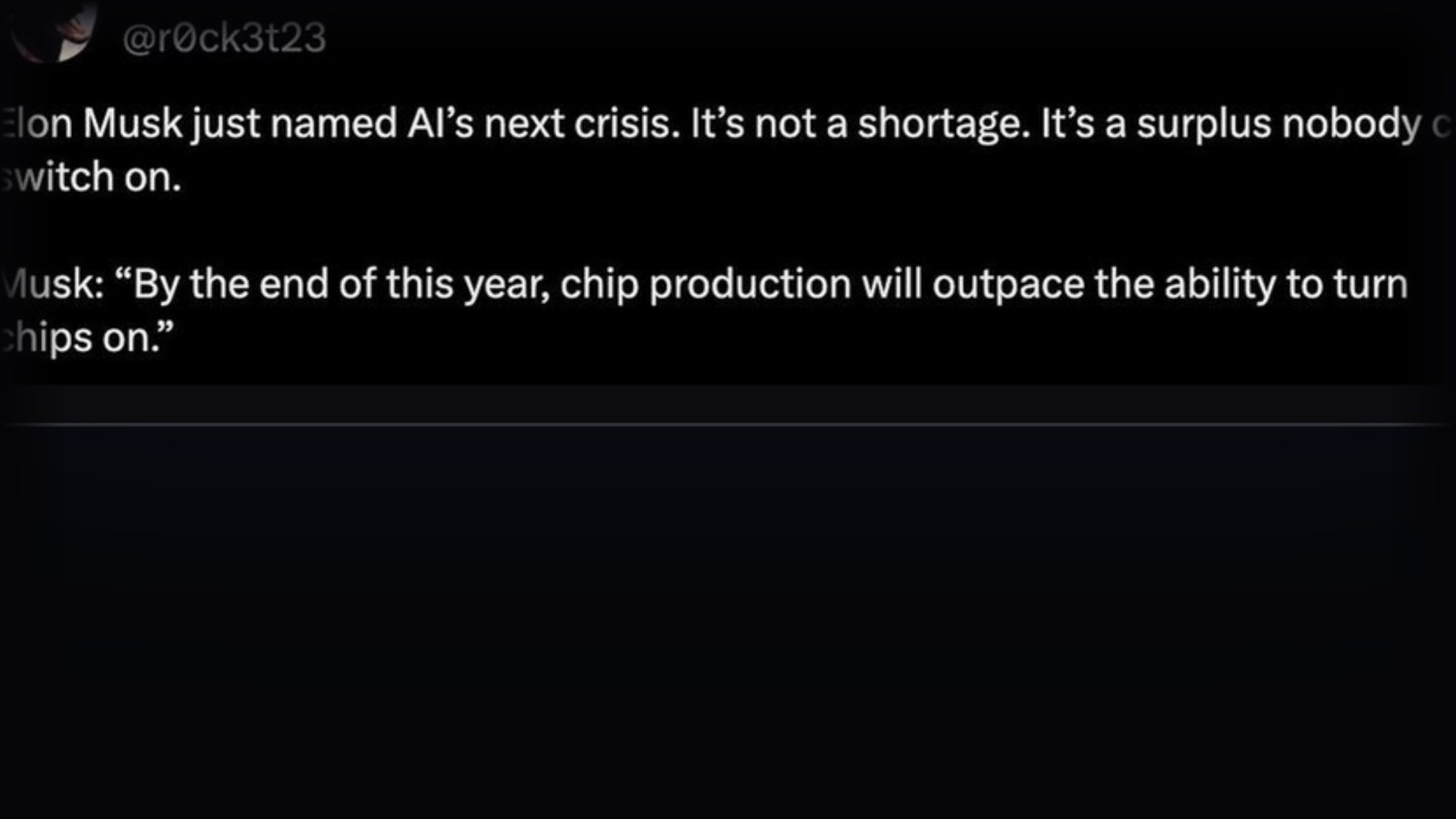
Illustration for the Musk power warning story
infrastructurechips

Musk's Davos warning that AI will run out of electricity is aging into consensus

Speaking at the World Economic Forum on January 22, 2026, Elon Musk said electrical power is fundamentally the limiting factor for AI deployment, warning that with US generating capacity growing only 3 to 4 percent a year, the industry could soon produce more chips than it can turn on. Months later, data-center power deals and grid bottlenecks dominate the AI infrastructure conversation.

Illustration for the HRL quantum chip story
chipsresearch

HRL's 18-qubit silicon chip runs its own error detection inside the cryostat

On July 29, 2026, HRL Laboratories published in Nature an 18-qubit silicon spin quantum processor that runs itself, with no racks of room-temperature control electronics. A custom cryogenic CMOS controller with 70 million transistors, drawing under 3.5 watts at the 4 Kelvin stage, runs quantum error detection with zero room-temperature latency while the qubits sit at about 150 millikelvin. Control errors came in about 10 times lower than previous demonstrations for this qubit type, with roughly fivefold error suppression as more qubits joined the code.

Illustration for the ChipAgents funding story
chipsmoney

ChipAgents raises $60M more to put AI agents inside semiconductor design

On July 29, 2026, ChipAgents extended its Series A to $134 million in total with a $60M round led by B Capital, with Micron, MediaTek and Ericsson among its investors. Its AI agents already run at more than 120 semiconductor companies, annual recurring revenue grew 6x in the first half of 2026, and the startup expanded its Nvidia partnership to build a specialized chip-design model.

Illustration for the chip stocks and memory prices story
chipsmoney

Chip stocks crash in Seoul while DRAM contract prices climb 20 to 30 percent

On July 28, 2026, the semiconductor selloff turned brutal in Seoul: SK Hynix closed 14.65% lower and Samsung Electronics fell 13.4%, dragging the KOSPI to its biggest one-day drop since March, in the fourth straight losing session for chip stocks globally. Investors were spooked by reports of China's progress on domestic chipmaking equipment including DUV lithography, circular financing unease, and stretched valuations. Meanwhile third-quarter DRAM contracts are settling 20 to 30% higher this month, as AI memory demand keeps prices climbing.

Illustration for the AMD Cerebras partnership story
chipsinfrastructure

AMD and Cerebras split AI inference in two with a disaggregated stack

On July 27, 2026, AMD and Cerebras announced a partnership pairing AMD's Helios rack-scale systems with the Cerebras Wafer-Scale Engine in one disaggregated inference stack: Helios handles prompt processing and long context, Cerebras takes over memory-bandwidth-heavy token generation. The combo promises up to 5x more energy efficiency, and AMD claims Helios delivers up to 30% more inference tokens per dollar than Nvidia's Vera Rubin NVL72 rack. Availability comes through Cerebras Cloud in the second half of 2026.

Illustration for the chip stocks selloff story
chipsmoney

Chip stocks post their worst day since April 2025 as China fears spread

On July 28, 2026, Bloomberg's gauge of semiconductor shares slumped 7.5%, the sector's worst day since April 2025, with Korean chipmakers hit hardest in an Asia-wide selloff. Investors were spooked by signs of real progress in China's advanced chipmaking, fears of circular financing in AI deals where Nvidia acts as lender, supplier, investor and partner at once, and doubts that record AI capex will translate into matching revenue. The rout landed in a week loaded with Big Tech earnings and a Fed meeting.

Illustration for the RAM price surge story
chipsproducts

RAM prices jump sixfold in a year and your next phone will pay for it

RAM prices jumped from $2.80 to about $12 per gigabyte in a year, a roughly sixfold surge, as memory makers redirect capacity to high-bandwidth memory for AI data centers. Qualcomm told customers chip prices rise by double digits for shipments after September 1, Google confirmed Pixel 11 prices are going up with reports pointing to about a $100 increase and a $899 starting price, and the memory bill for a 16GB flagship went from roughly $45 to about $192. Official Pixel 11 pricing lands at the Made by Google event on August 12.

Illustration for the MetaX Hong Kong IPO story
chipsmoney

Chinese GPU maker MetaX files for Hong Kong IPO six months after 700 percent Shanghai debut

Shanghai-based GPU maker MetaX, founded by former AMD engineers, has confidentially filed for a Hong Kong listing targeting an IPO by the end of 2026, per SCMP. The move comes about six months after its December 2025 Star Market debut, when the stock surged nearly 700 percent on day one after raising 4.2 billion yuan (about $596 million). The plan is H shares of up to 5 percent of enlarged capital, funding next-gen GPU development as Beijing pushes Chinese AI firms off Nvidia silicon.

Illustration for the Intel Q2 earnings story
chipsmoney

Intel posts its strongest revenue growth in 15 years as AI server demand arrives

Intel's Q2 2026 results, reported July 23, showed revenue of $16.1 billion, up 25 percent year over year against $14.4 billion expected, with adjusted EPS of $0.42 doubling the $0.21 estimate. The Data Center and AI segment surged 59 percent on AI server demand, and the stock jumped about 13 percent after hours. CEO Lip-Bu Tan called it the company's strongest quarterly revenue growth in more than fifteen years.

Illustration for the AMD and Anthropic partnership story
chipsmoney

AMD to invest up to $5 billion in Anthropic and supply 2 gigawatts of Instinct GPUs

At Advancing AI 2026, AMD announced it will invest up to $5 billion in Anthropic, its first ever investment in an AI company, phased in as deployment milestones are hit. Anthropic will deploy up to 2 gigawatts of AMD Instinct MI450 Series GPUs in Helios rack-scale systems, with the first gigawatt online in the first half of 2027, and Claude will help optimize AMD workloads and accelerate ROCm development.

Illustration for the AMD Advancing AI 2026 story
chips

AMD's Advancing AI 2026 brings Zen 6 EPYC Venice launch and Azure rack deal

AMD's flagship Advancing AI 2026 event runs July 22-23 in San Francisco with Lisa Su keynoting, confirming the commercial launch of EPYC Venice server processors on the Zen 6 architecture plus an Instinct MI455X and MI500 roadmap update. Microsoft Azure publicly committed to deploying AMD's Helios racks, 72 MI455X GPUs per rack, for AI inference, with new VM families arriving in the second half of 2026. Analysts expect a major new customer announcement on stage, with Anthropic flagged as the most likely name.

Illustration for the Google Frozen v2 chip story
chipsmodels

Google reportedly designing Frozen v2 chip with Gemini baked into silicon

The Information reported on July 20, 2026 that Google is developing "Frozen v2", an inference chip that hardwires parts of Gemini's architecture into the circuitry, with project engineers estimating 6 to 10 times more token output per watt than Google's latest TPUs. The chip embeds the model's architecture, not its weights, so new Gemini versions can load as long as the blueprint stays the same. Deployment is targeted for 2028; Google has not officially confirmed the project.

Illustration for the ASML stock grant story
chipsmoney

ASML gives every employee a 20,000 euro stock award as AI chip profits surge

ASML is giving every employee a one-time stock award worth 20,000 euros (about $22,900), as reported by Bloomberg: roughly 45,000 employees worldwide are eligible, shares are granted January 1, 2027 and vest January 1, 2030, but only for those still at the company, at a total cost close to 900 million euros. The move follows a record quarter of 9.3 billion euros in sales and 2.9 billion in profit, with the full-year forecast raised for the second time this year on AI demand. Samsung, SK Hynix and TSMC have all rolled out profit-sharing programs this year.

Illustration for the chip bear market story
chipsmoney

Chip stocks slide into a bear market as investors reprice the AI trade

On July 17, 2026, the Philadelphia SE Semiconductor index closed 20.2% below its June 22 record high, confirming a technical bear market after its worst week since March 2025. Nvidia fell 2.2% that day and Apple briefly overtook it as the world's most valuable company, with both hovering around $4.9 trillion. The index is still up roughly 65% year to date, so this reads as a repricing of how fast AI infrastructure spending can compound, not a collapse in AI demand.

Illustration for the IBM nanostack chip story
chipsresearch

IBM's nanostack demo puts nearly 100 billion transistors on a fingernail of silicon

IBM unveiled its nanostack chip architecture on June 25, 2026, and the images went viral in mid-July: transistor channels built from three nanosheets roughly 15 atoms thick, bonded in vertical layers, fitting nearly 100 billion transistors on silicon about the size of a fingernail with up to 50% more performance or 70% better energy efficiency than IBM's 2nm node. The 0.7nm label is a node name rather than a measurement, and researchers have publicly pushed back on it. It is a lab result: IBM targets commercial use within five years, while experts quoted by MIT Technology Review expect wide deployment closer to a decade out.

Illustration for the SEMI equipment forecast story
chipsmoney

SEMI forecasts record $229 billion in chip equipment sales by 2028

SEMI's mid-year forecast, published July 14, 2026, puts total semiconductor manufacturing equipment sales at $165.9 billion in 2026, up 23.2% year over year, rising to a record $229.5 billion in 2028, with wafer fab equipment reaching $143.9 billion next year, test equipment growing 31% and DRAM equipment jumping 39%. Three days later, the Philadelphia SE Semiconductor index closed 20% below its record and entered a bear market. The forecast came first, so it is not a response to the selloff, which makes the gap between order books and market sentiment the real story.

Illustration for the TSMC Arizona investment story
chipsinfrastructure

TSMC adds $100 billion in Arizona, lifting planned US investment to $265 billion

On July 16, 2026, the White House and the Commerce Department announced that TSMC will invest an incremental $100 billion in advanced chip manufacturing and packaging in Arizona, bringing its total planned US investment to a record $265 billion and its US footprint to 12 sites. The same day TSMC posted its fifth straight record quarter with net income of NT$706.56 billion, up 77% year over year. The $265 billion is planned rather than spent, with risk production targeted for 2027 and mass production in 2028.

Illustration for the Nvidia Asia buyers story
chipspolicy

Nvidia cuts its approved Asia chip buyers by more than half to stop smuggling

Nvidia has cut its list of approved AI chip buyers and distributors in Asia by more than 50%, per the Financial Times on July 14, 2026, after months of tightening compliance in Japan, Singapore and Malaysia to keep chips from being smuggled into China. Vetting now includes in-person data center audits, contract verification and end-user interviews, with US Department of Commerce oversight. The crackdown mostly hit 'neoclouds' suspected of reselling compute across the border.

Illustration for the Meta Iris chip story
chipsinfrastructure

Meta's custom Iris AI chip enters production at TSMC this September

Meta will start manufacturing its in-house AI accelerator codenamed Iris this September, per Reuters citing an internal memo from July 10, 2026. The chip was designed with Broadcom, will be fabricated by TSMC as part of the MTIA program, and testing wrapped in about six weeks with no major issues. Meta is targeting 7 gigawatts of compute capacity in 2026 and plans to double that to 14 gigawatts in 2027.

Illustration for the Samsung Yongin fab story
chipsinfrastructure

Samsung pulls its first Yongin megafab forward to 2029 on AI memory demand

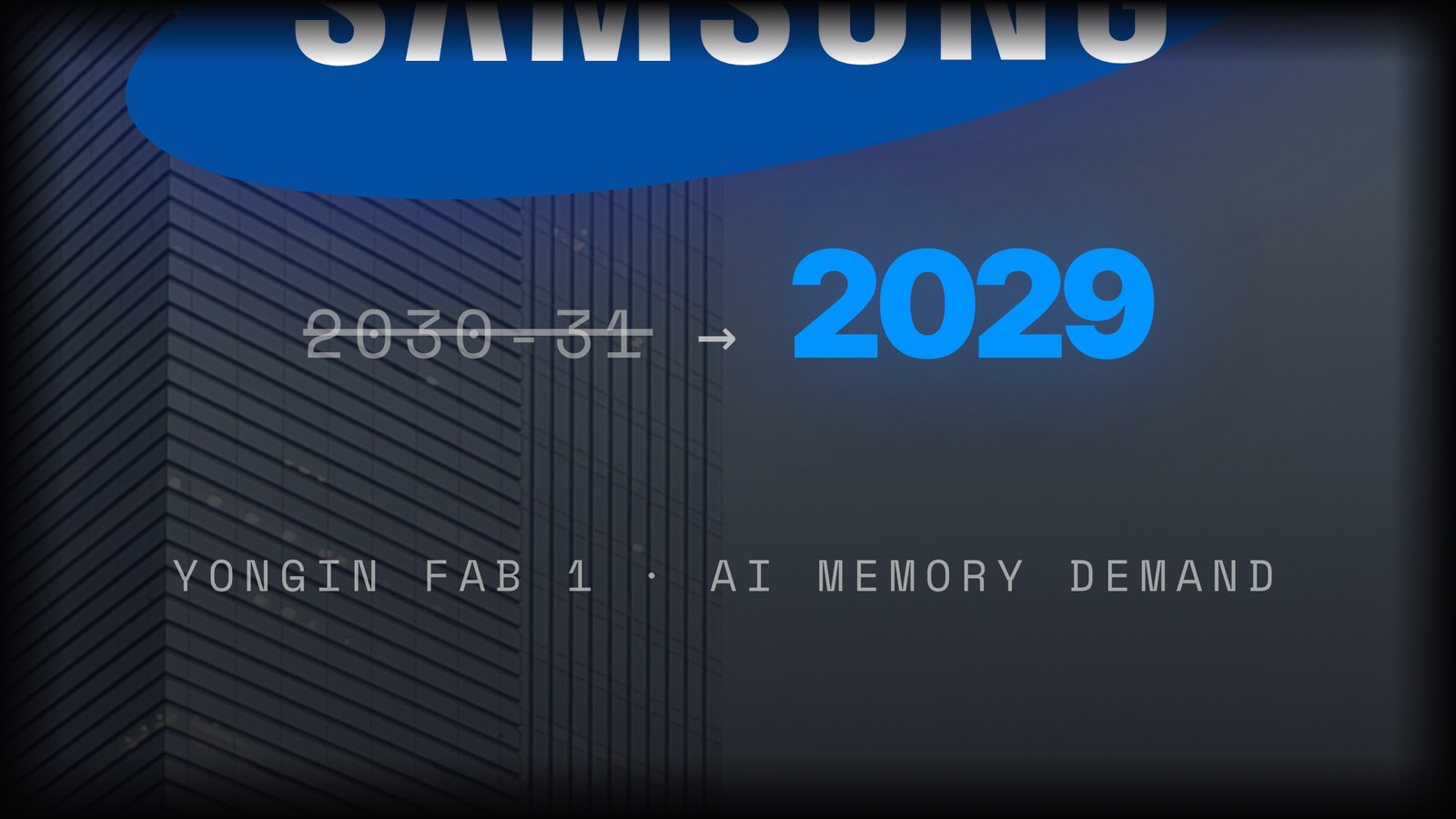
Samsung Electronics confirmed on July 13, 2026 that it plans to begin operating its first Yongin chip fab in 2029, one to two years ahead of the original 2030-31 schedule, to keep up with surging AI memory demand. The compressed timeline requires site preparation in the second half of 2026 and construction in 2027. The plan surfaced the same day Korean chip stocks had their worst session in years, with SK Hynix down over 15%.

Illustration for the SK Hynix crash story
chipsmoney

SK Hynix goes from record Nasdaq debut to record 15% crash in one weekend

On Friday, July 10, 2026, SK Hynix ADRs closed their Nasdaq debut up 13%, the largest foreign listing in US history. On Monday, July 13, the company's Seoul shares fell more than 15%, the biggest one-day drop in its history, as profit-taking, a below-consensus Q2 profit forecast and a US-Iran risk-off wave hit at once. Korea's KOSPI plunged 8%, tripping a circuit breaker for the seventh time this year, and Samsung dropped about 10%.

Illustration for the Samsung profit record story
chipsmoney

Samsung posts record $58.4 billion quarterly profit, topping Nvidia

On July 7, 2026, Samsung Electronics reported about 89.4 trillion won ($58.4 billion) in Q2 2026 operating profit, up roughly 19x year over year and the largest single-quarter operating profit any technology company has ever reported, topping Nvidia's $53.5 billion record. The driver is AI memory: HBM demand has outrun supply for three straight quarters, with DRAM prices up 44% and NAND up 53% in the quarter.