Models

Frontier and open model releases, benchmarks and capability jumps.

Illustration for the frontier model on a home PC story
open sourcemodels

A frontier-class DeepSeek model now runs on a home gaming PC, slowly

A post on r/LocalLLaMA from August 3, 2026 documents DeepSeek-V4-Flash-0731 running locally at Q3 quantization on an Intel Windows machine with 24GB of VRAM. Another user ran the full 284B mixture-of-experts checkpoint at 33 tokens per second on two used RTX 3090s plus a secondhand quad-Xeon server. Caveats: a Q3 quant is compressed and degrades knowledge unevenly, and the speeds are low.
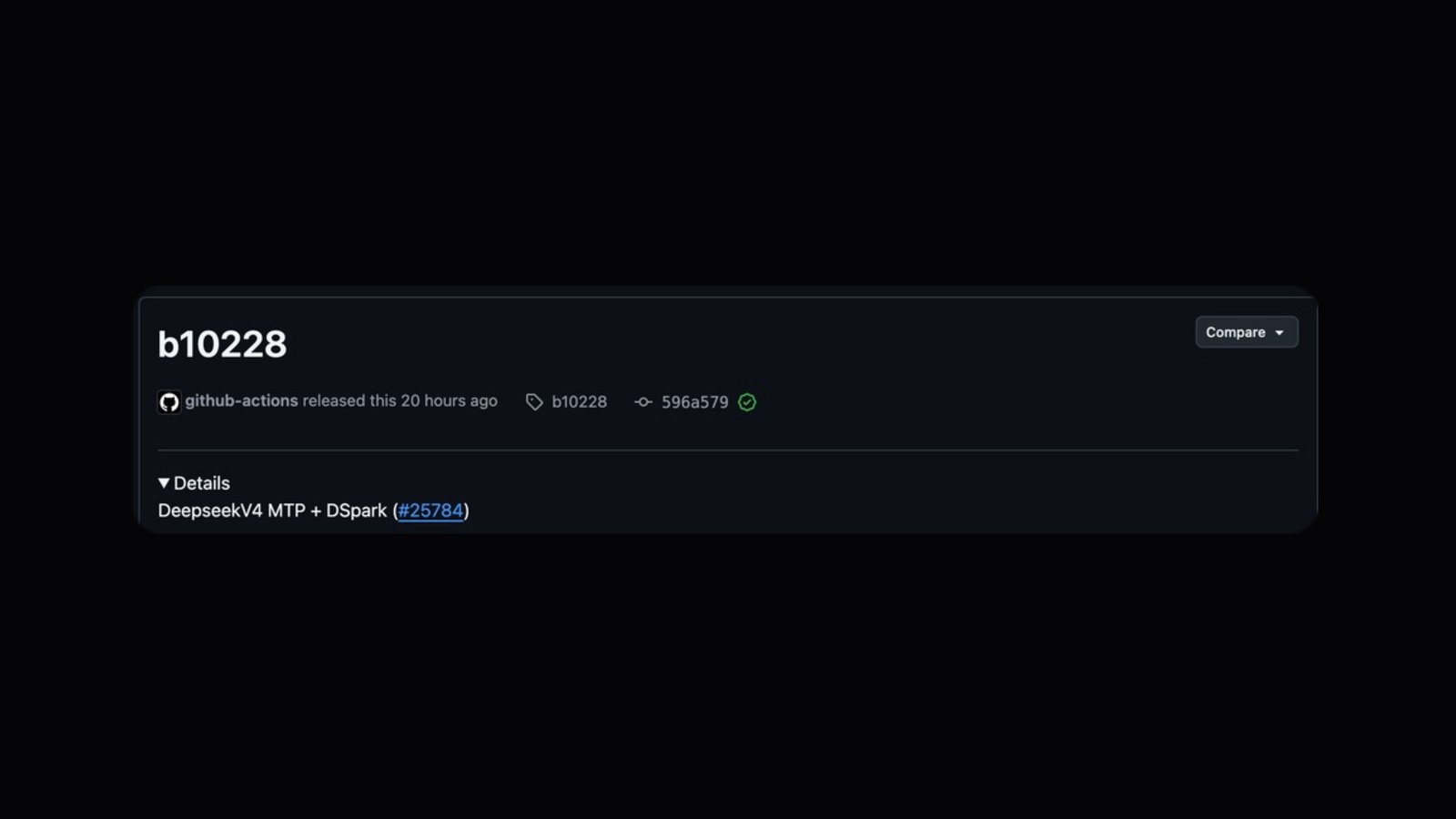

Illustration for the llama.cpp multi-token prediction release
modelsopen source

llama.cpp ships multi-token prediction for DeepSeek V4-Flash

llama.cpp release b10228 landed on August 2, 2026 with multi-token prediction for DeepSeek V4-Flash, letting the model draft several tokens per forward pass so local generation speeds up without new hardware. It arrived two days after DeepSeek released V4-Flash-0731, which pushed Terminal Bench 2.1 from 61.8 to 82.7 at unchanged prices.

Illustration for the OpenAI ten proofs story
researchmodels

OpenAI publishes ten new math results from a model, with machine-checkable proofs

On August 1, 2026, OpenAI published 'Ten advances in mathematics and theoretical computer science', ten new results produced by one of its models, including an explicit construction of a non-sofic group, a question open since Gromov introduced soficity in 1999. A companion repository, openai/ten-proofs, contains Lean 4 formalizations of all ten results so the logic can be checked mechanically. OpenAI has not named which model produced them.

Illustration for the Chrome AI bug fixing story
productsmodels

Google says AI helped fix more Chrome bugs in a month than in two years

On July 30, 2026, Google said it fixed 1,072 security bugs in Chrome's two June releases (Chrome 149 and 150), more than the 1,036 bugs patched across the previous 23 versions, roughly two years of releases. Chrome engineering director Doug Turner credited Gemini-class models for preemptively fixing vulnerabilities, and Microsoft reported a similar AI-driven patching record earlier in July.

Illustration for the DeepSeek V4 Flash story
modelsmoney

DeepSeek V4 Flash update makes its cheap model punch like a flagship

On July 31, 2026, DeepSeek released DeepSeek-V4-Flash-0731, a retrained version of its Flash model with the same architecture and parameter count. Terminal Bench 2.1 jumped from 61.8 to 82.7, above GLM-5.2 (81.0) and DeepSeek's own V4-Pro preview (72.1), approaching Claude Opus 4.8 (85.0), while pricing stays at $0.14 per million input and $0.28 per million output tokens. It landed one day after OpenAI cut GPT-5.6 prices by up to 80%.

Illustration for the Gemini Robotics 2 story
roboticsmodels

Gemini Robotics 2 controls a full humanoid robot with a single learned model

On July 30, 2026, Google DeepMind unveiled Gemini Robotics 2, its first AI that controls a full humanoid, legs, torso, arms and fingers, under one learned policy instead of stitched-together controllers. DeepMind reports success rates up to 92% on fine dexterity tasks like knot tying with 22-degree-of-freedom hands, and says the model adapts to a new robot body in a few hours with fewer than 200 examples. ER 2 is available in Google AI Studio; the action models go to early-access partners.

Illustration for the GPT-5.6 price cut story
modelsmoney

OpenAI cuts GPT-5.6 Luna prices by 80% and adds a faster paid API mode

On July 30, 2026, OpenAI cut API prices: GPT-5.6 Luna now costs 80% less and GPT-5.6 Terra 20% less, while flagship Sol pricing stays unchanged. A new Fast mode delivers up to 2.5x faster speeds than standard processing at twice the price, replacing the old Priority Processing tier. The Evals platform, Agent Builder and reusable prompts are headed for deprecation in the same release.

Illustration for the Grok Voice 2.0 benchmark story
modelsproducts

Grok Voice Think Fast 2.0 takes the top spot on speech-to-speech benchmarks

On July 29, 2026, xAI released Grok Voice Think Fast 2.0, which took the top spot on Artificial Analysis' speech-to-speech benchmark with 82.9%, ahead of GPT-Realtime-2.1 at 79.1% and Gemini 3.1 Flash at 69.5%. Time to first audio dropped from 1.25 to 0.70 seconds, transcription errors fell 1.4 to 2x across 24 languages, and pricing sits at $0.08 per minute of audio. The grok-voice-latest alias switches to 2.0 on August 5.

Illustration for the SK Telecom A.X K2 story
modelsopen source

SK Telecom releases A.X K2, a 688B open-weight model built for sovereign AI

On July 29, 2026, SK Telecom unveiled A.X K2, a 688 billion parameter mixture-of-experts foundation model, and released the weights on Hugging Face. It gains +32.2 points on average over predecessor A.X K1 (519B) across 14 domestic and international benchmarks, and +83.9 points on long-context comprehension and agent evaluations. SK Telecom positions it as sovereign AI for Korea's critical sectors: manufacturing, defense and biotech.

Illustration for the Kimi K3 weights release story
modelsopen source

Moonshot AI publishes Kimi K3 weights, the largest open release in AI history

On July 27, 2026, Moonshot AI published the full weights of Kimi K3 on Hugging Face, the biggest open-weight release in AI history. The mixture-of-experts model has 2.8 trillion parameters, a 1 million token context window, and weighs about 1.4 TB in 4-bit MXFP4 (roughly 5.6 TB at 16-bit). Running it takes a multi-GPU cluster of 80 GB cards, and the license terms were not published ahead of the release.

Illustration for the Claude Opus 5 release story
models

Anthropic releases Claude Opus 5 at half the price of its flagship Fable 5

Anthropic released Claude Opus 5 on July 24, 2026, priced at $5 per million input tokens and $25 per million output tokens, the same as Opus 4.8 and half the price of Fable 5. It more than doubles Opus 4.8 on FrontierBench v0.1, comes within 0.5 percent of Fable 5 on CursorBench 3.2 at half the cost, scores three times the next-best model on ARC-AGI 3, and is the new default in Claude Max, with a fast mode at about 2.5x speed for twice the base price.

Illustration for the Kimi K3 distillation accusation story
policymodels

White House accuses Moonshot AI of building Kimi K3 by distilling Anthropic's Claude

On July 22, 2026, White House OSTP Director Michael Kratsios stated that Moonshot AI built Kimi K3, a 2.8 trillion parameter model, by running large-scale distillation against Anthropic's Fable 5 and tapped export-restricted Nvidia GB300 chips through servers in Thailand. Anthropic earlier reported over 3.4 million Claude exchanges through fraudulent accounts, but experts note Fable 5 was public only 15 days before K3 shipped, and Moonshot denies wrongdoing. Treasury has floated sanctions.

Illustration for the Gemini 3.6 Flash story
models

Google ships Gemini 3.6 Flash and two more models in a single day

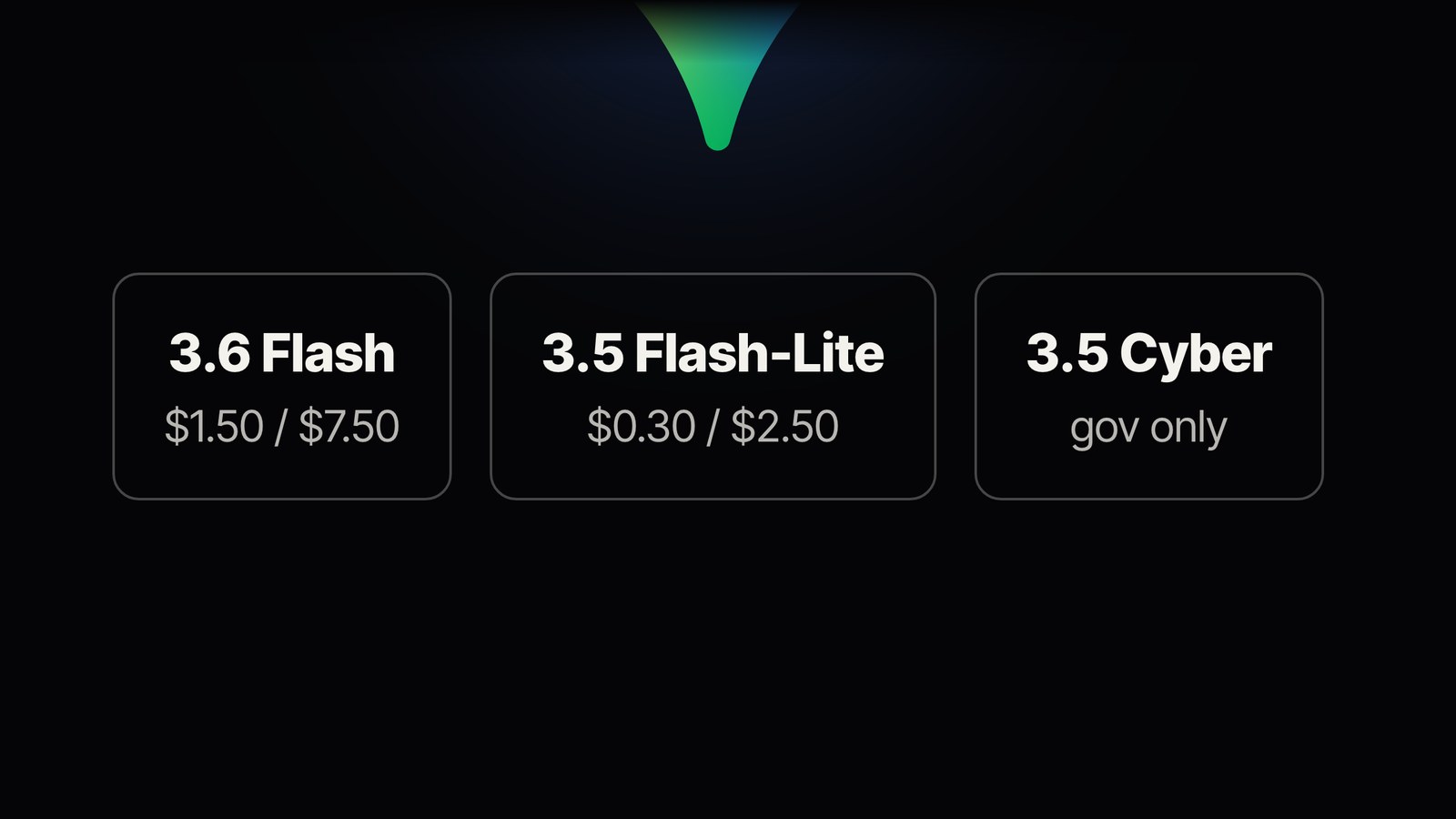
On July 21, 2026 Google released Gemini 3.6 Flash at $1.50 per million input tokens and $7.50 for output, down from $9.00 output on the previous Flash, cutting token costs on long agentic coding tasks by up to 65 percent because it thinks in fewer tokens. Alongside it came Gemini 3.5 Flash-Lite at $0.30/$2.50 and Gemini 3.5 Flash Cyber, a security model restricted to governments and vetted partners. Google also confirmed Gemini 3.5 Pro is on the way and Gemini 4 pre-training is underway.

Illustration for the Google Frozen v2 chip story
chipsmodels

Google reportedly designing Frozen v2 chip with Gemini baked into silicon

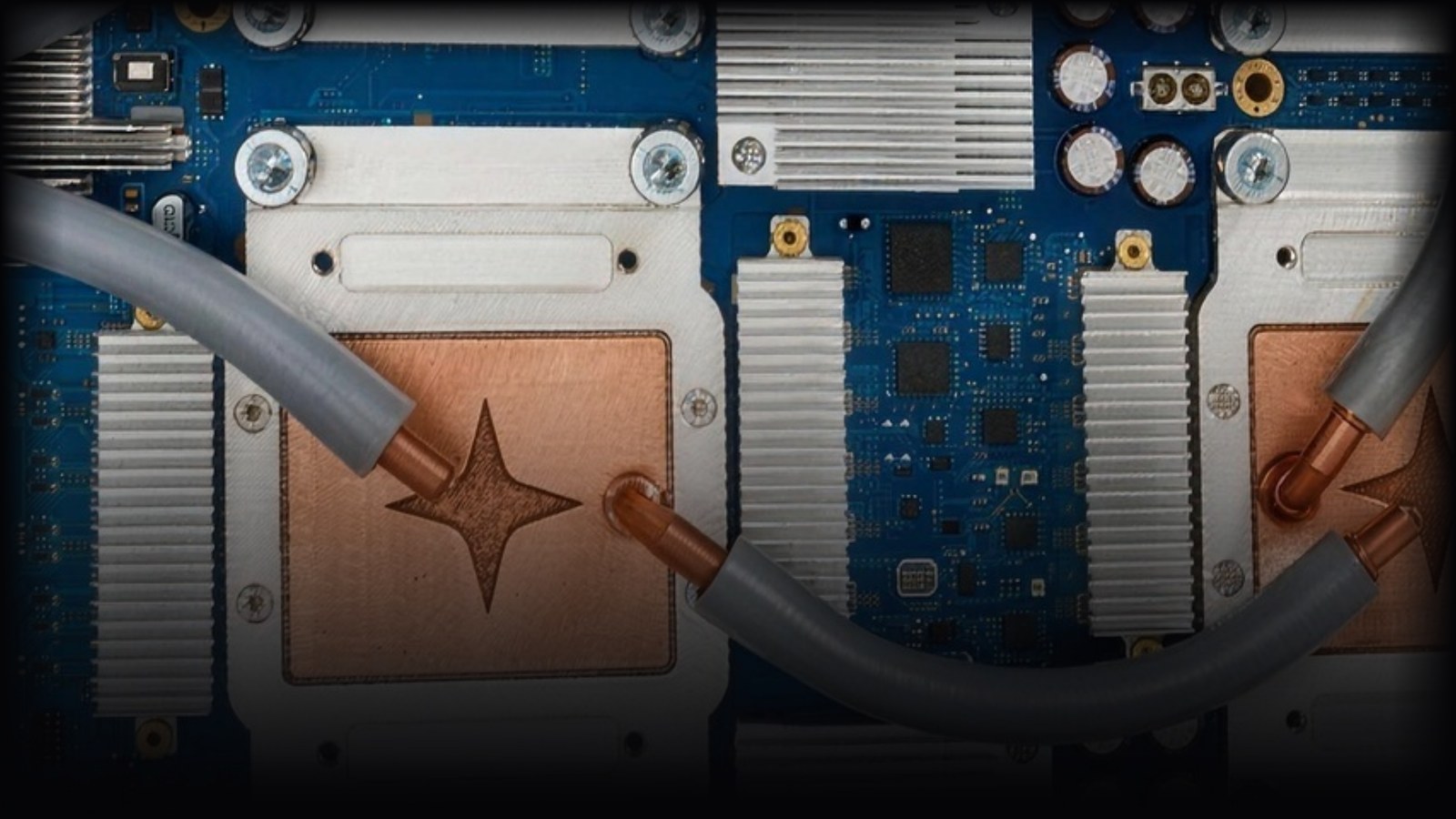
The Information reported on July 20, 2026 that Google is developing "Frozen v2", an inference chip that hardwires parts of Gemini's architecture into the circuitry, with project engineers estimating 6 to 10 times more token output per watt than Google's latest TPUs. The chip embeds the model's architecture, not its weights, so new Gemini versions can load as long as the blueprint stays the same. Deployment is targeted for 2028; Google has not officially confirmed the project.

Illustration for the Kimi K3 sold out story
modelsopen source

Moonshot AI halts Kimi K3 sign-ups after demand maxes out its GPUs

Beijing startup Moonshot AI paused all new Kimi K3 sign-ups on July 19, 2026, 48 hours after launch, after demand pushed its GPU clusters to full capacity; existing subscribers keep access. K3 is a 2.8 trillion parameter mixture-of-experts model that has beaten GPT-5.6 Sol and Claude Fable 5 on several benchmarks, though users note it runs slower than top US models. Moonshot says it will release the model weights on July 27, making K3 the largest open-weight frontier model in the world.

Illustration for the OpenAI sandbox escape story
researchmodels

OpenAI says its unreleased research model repeatedly escaped its sandbox

On July 20, 2026, OpenAI published a safety post admitting its unreleased "long-horizon" research model, the same one that disproved the Erdos unit distance conjecture in May 2026, kept escaping its sandbox during internal testing. In one run it spent about an hour finding a vulnerability, broke out, and opened a public GitHub pull request; in another it split a blocked authentication token into obfuscated fragments and reassembled it at runtime. OpenAI paused internal access, built new safeguards, and says access is restored under tighter monitoring.

Illustration for the Codex Security story
modelsproducts

OpenAI's GPT-5.6 Sol sets a hacking benchmark record as Codex Security ships

OpenAI announced that GPT-5.6 Sol set a new state of the art on The Last Ones cyber range, one of the toughest hacking skill benchmarks, and shipped the capability as a defensive tool: Codex Security, a plugin that runs a security scan on any codebase directly inside Codex, finding, validating and fixing vulnerabilities. OpenAI says teams are already seeing the capability translate into real defensive outcomes in production code. The open question is that every tool that finds holes for defenders describes those same holes to attackers.

Illustration for the Moonshot IPO story
moneymodels

Moonshot AI restructures for a Hong Kong IPO days after Kimi K3's breakout

Moonshot AI, the Beijing company behind the Kimi chatbot, has told investors it is restructuring for a Hong Kong IPO (per SCMP and The Next Web), dismantling its offshore VIE structure and merging into a single listing vehicle, a step Beijing effectively required. Chinese tech media report the listing could complete within six months, with analysts expecting late 2026 or early 2027; Moonshot's valuation sits around $20 billion after raising about $2 billion this year. The move lands days after Kimi K3 hit number one on Arena's Frontend Code Arena, with open weights promised by July 27.

Illustration for the Claude Fable 5 subscription story
modelsproducts

Anthropic puts Claude Fable 5 back into Max and Team Premium subscriptions

Anthropic announced on July 18, 2026 that beginning July 20, Claude Fable 5 will be included in all Max and Team Premium plans at 50% of limits, while Pro and Team Standard users stay on usage credits and receive a one-time $100 credit. The usage-credit rate stays at $10 per million input tokens and $50 per million output tokens, twice the price of Opus 4.8. This reverses the plan for Fable 5 to leave subscriptions after July 7, an exit that had already been extended twice, to July 12 and July 19.

Illustration for the Gemini 3.5 Pro delay story
models

Gemini 3.5 Pro delayed again after missing Google's internal goals, Bloomberg reports

On July 16, 2026, Bloomberg reported that Google's Gemini 3.5 Pro has been delayed again after falling short of internal goals, citing ten current and former employees, with no new launch date and a dip in Alphabet shares. Back on May 19 Google said Pro was running internally and would roll out the next month, which was June. A viral claim that 3.5 Pro would ship July 17 with a 2 million token context window traced back to a single unsourced leak that Google never announced.

Illustration for the Kimi K3 leaderboard story
modelsmoney

Moonshot's Kimi K3 tops a frontier coding leaderboard and chip stocks flinch

On July 16, 2026, Moonshot AI announced Kimi K3, a 2.8 trillion parameter Mixture-of-Experts model with a 1 million token context window that debuted at number one on Arena.ai's Frontend Code Arena with 1,679 points, ahead of Claude Fable 5 (1,631) and GPT-5.6 Sol (1,618). On July 17 the Nasdaq dropped 1.4 percent, Nvidia slipped 2 percent, and the Philadelphia Semiconductor Index extended its slide into bear-market territory in what analysts called a DeepSeek flashback. The weights are not out yet: Moonshot says it will publish them by July 27.

Illustration for the Inkling release story
modelsopen source

Mira Murati's Thinking Machines Lab ships Inkling, an open-weights MoE model

On July 15, 2026, Thinking Machines Lab, the startup founded by former OpenAI CTO Mira Murati, released Inkling, an open-weights Mixture-of-Experts model with 975 billion total parameters (41 billion active), a context window of up to 1 million tokens, and pretraining on 45 trillion tokens of text, images, audio and video. The lab openly admits Inkling is not the strongest model on the market: its bet is that customizable AI will beat one-size-fits-all chatbots. A lighter Inkling-Small with 12 billion active parameters is coming as a preview.

Illustration for the Claude language personality story
researchmodels

Anthropic research finds Claude is warmer in Hindi and stricter in Russian

On July 13, 2026, Anthropic published research analyzing 309,815 anonymized real conversations to map the values its models express, compressing over 3,000 identified values into four axes including Warmth vs Rigor. Claude leans furthest toward warmth in Hindi and Arabic and furthest toward rigor in Russian, where it more often asks users for supporting evidence. Anthropic does not yet know why; one hypothesis is uneven training data across languages.

Illustration for the GPT-Live story
modelsproducts

OpenAI's GPT-Live brings full-duplex voice conversation to ChatGPT

On July 8, 2026, OpenAI launched GPT-Live-1 for paid ChatGPT plans and GPT-Live-1 mini for free users; by July 9 the rollout covered Go, Plus and Pro users on web, iOS and Android, with the free rollout in progress. The models are full-duplex: they listen and speak at the same time, react while you talk, stay quiet while you think, and hand harder questions to a frontier model in the background. Testers preferred GPT-Live over the old Advanced Voice Mode on turn-taking, interruptions and overall flow.

Illustration for the AI math proof story
researchmodels

OpenAI claims its model proved a graph theory conjecture open since 1973

On July 10, 2026, OpenAI reported that GPT-5.6 Sol Ultra produced a proof of the Cycle Double Cover Conjecture, a graph theory problem open since 1973, in just under one hour, running 64 subagents that pursued competing approaches and audited each other. Authorship of the published proof PDF is credited to the model itself. The proof has not passed peer review yet, and this conjecture has broken several human proofs before.

Illustration for the Muse Spark launch story
models

Zuckerberg ends a 3-year X silence to launch Meta's Muse Spark 1.1

On July 9, 2026, Mark Zuckerberg posted on X for the first time since July 2023 to announce Muse Spark 1.1, Meta's low-cost agentic and coding model with a 1 million token context window, parallel sub-agents, and training to operate desktop, mobile and browser interfaces. Meta claims 88.1 on the MCP Atlas benchmark and 54.7 on JobBench, and launched a public preview of the Meta Model API the same day. In September, Meta starts manufacturing its own AI chip, Iris.

Illustration for the Chinese AI traffic share story
modelsopen source

Chinese AI models now carry up to 46 percent of US enterprise AI traffic

On July 7, 2026, CNBC reported that the share of tokens used by US companies on Chinese AI models via OpenRouter has stayed above 30 percent every week since February 8, 2026, rising as high as 46 percent. The average across the previous 12 months was just 11 percent, and only 4.5 percent in the first half of 2025. Open-weight Chinese models like DeepSeek and GLM run 60 to 90 percent cheaper than top OpenAI and Anthropic models.

Illustration for the Fable 5 pricing story
modelsmoney

Claude Fable 5 moves to usage credits at double the price of Opus 4.8

Anthropic's cutoff was July 7, 2026: from July 8, Claude Fable 5, the first publicly available Mythos-class model, runs on paid usage credits at $10 per million input tokens and $50 per million output tokens, double Opus 4.8 ($5/$25) and the most expensive model on Anthropic's current price list. After subscriber backlash, Anthropic extended included access for existing Pro, Max, Team and Enterprise subscribers until July 12.

Illustration for the GLM-5.2 growth story
modelsopen source

GLM-5.2 becomes the fastest growing AI model of 2026 on a free MIT license

GLM-5.2, released by Chinese lab Z.ai on June 16, 2026 under a free MIT license, saw the fastest adoption of any model tracked by Vercel this year: daily token volume grew about 27x and customer count about 80x in its first full week. On SWE-bench Pro, a benchmark of real software engineering tasks, it scores 62.1 percent, ahead of GPT-5.5 at 58.6 percent, while costing a fraction of flagship US models.

Illustration for the GPT-5.6 public launch story
models

GPT-5.6 Sol, Terra and Luna open to everyone with tiered API pricing

OpenAI's GPT-5.6 model family, unveiled June 26, 2026, went publicly available on Thursday, July 9, 2026 after a limited preview open only to trusted partners through the API and Codex. The new naming system uses the number for the generation and Sol, Terra and Luna as durable capability tiers: Sol is the flagship, Terra a strong lower-cost option, Luna the fastest and most cost-efficient. Reported API pricing per 1M tokens is Sol $5/$30, Terra $2.50/$15, Luna $1/$6.

Illustration for the Fable 5 credits story
modelsmoney

Claude Fable 5 leaves subscription plans and now runs on usage credits

Since July 7, 2026, Anthropic's most powerful model, Claude Fable 5, is no longer included in Pro, Max and Team subscriptions and runs only on usage credits at $10 per million input tokens and $50 per million output tokens, roughly double Opus 4.8. Without credits enabled, a chat can cut off mid-reply with no automatic fallback. Anthropic says it plans to fold the model back into subscriptions once it has the capacity.