AMD and Cerebras split AI inference in two with a disaggregated stack
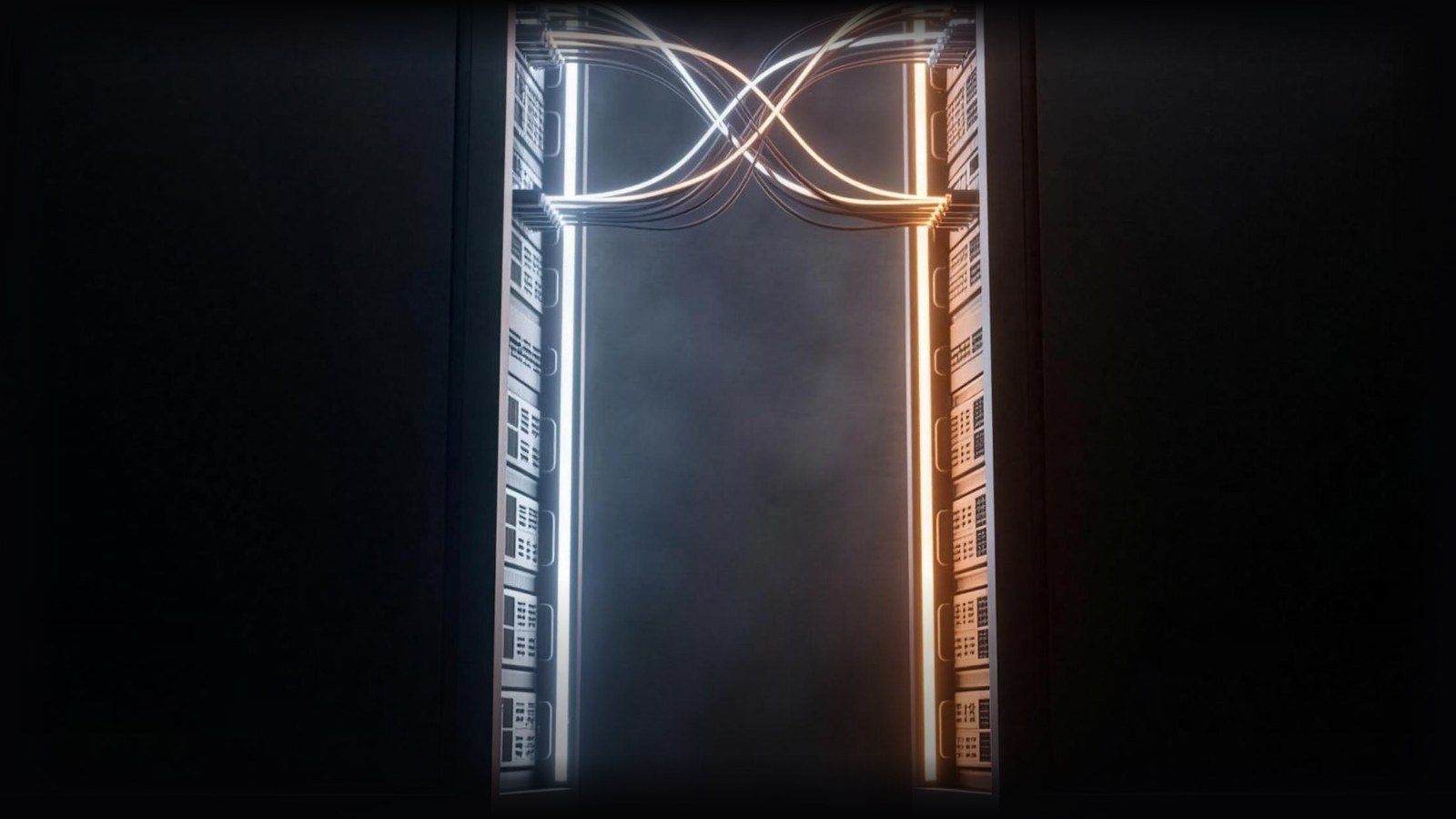
AMD and Cerebras announced a partnership that splits AI inference in two. Revealed on July 27, 2026, the deal pairs AMD’s Helios rack-scale systems with the Cerebras Wafer-Scale Engine in one disaggregated stack.
How the split works
Inference has two phases with very different hardware appetites, and the partnership assigns each phase to the chip best suited for it:
- AMD Helios, with EPYC processors, handles prompt processing and long context windows
- The Cerebras Wafer-Scale Engine takes over token generation, the memory-bandwidth-heavy part
By disaggregating the pipeline, the partners claim the combination delivers up to 5x more energy efficiency for inference. AMD also claims Helios delivers up to 30% more inference tokens per dollar than Nvidia’s Vera Rubin NVL72 rack.
Those are vendor claims, and they will get tested when real workloads land on the stack. But the architecture argument is straightforward: forcing one chip design to serve both phases means compromising on at least one of them.
Where and when
The combined stack will be available through Cerebras Cloud in the second half of 2026. The target workloads are the ones where latency matters most: agents, coding, robotics and scientific computing.
That focus makes sense for the architecture. Agentic and coding workloads generate tokens in long, latency-sensitive streams, exactly the phase the Wafer-Scale Engine is built to accelerate.
The anti-Nvidia stack
The strategic read is as interesting as the technical one. AMD and Cerebras are both challengers to the same market leader, and neither has managed to dent Nvidia’s inference dominance alone. Pooling complementary strengths, AMD’s rack-scale systems and Cerebras’s wafer-scale silicon, is how real competition usually starts: not one rival beating the leader outright, but an alliance changing the shape of the comparison.
Whether the 5x efficiency and 30% cost claims survive independent benchmarking will decide if this is a turning point or a press release. The second half of 2026 will tell.
Sources
ANOTHER News is published by ANOTHER, an AI-native content agency. Daily coverage also runs on Instagram.
Related
DFSX claims an HBM-free AI chip with double NVIDIA's system bandwidth on 14nm
Dongfang Suanxin stacks DRAM directly on top of the compute die with 3D hybrid bonding, so its chips need no HBM, the memory hardest for Chinese firms to obtain under export controls. The company claims a TY64 SuperNode built from 14nm DF2000 chips delivers 960 TB/s of memory bandwidth against 576 TB/s for NVIDIA's GB200 NVL72. The numbers are self-reported and unverified.
DeepSeek is building a gigawatt of compute in Inner Mongolia, Bloomberg reports
Bloomberg reported on July 30, 2026 that Hangzhou-based DeepSeek is adding one gigawatt of compute in Ulanqab, Inner Mongolia, about 350 kilometers northwest of Beijing, building its own campus while leasing extra capacity, with part expected online by end of 2027 or start of 2028. The chips are undecided: Nvidia, Huawei, DeepSeek's own future silicon, or a mix. It would be the largest AI facility any Chinese company operates.
Meta discloses $279 billion in future AI data center lease commitments
In a filing for the quarter ended June 30, 2026, Meta disclosed $279 billion in future lease obligations, mostly AI data centers, up 53% from $183 billion a quarter earlier, with another $68 billion added in July alone. Under US accounting rules these commitments stay off the balance sheet until services begin. Shares fell roughly 7%.