NVIDIA

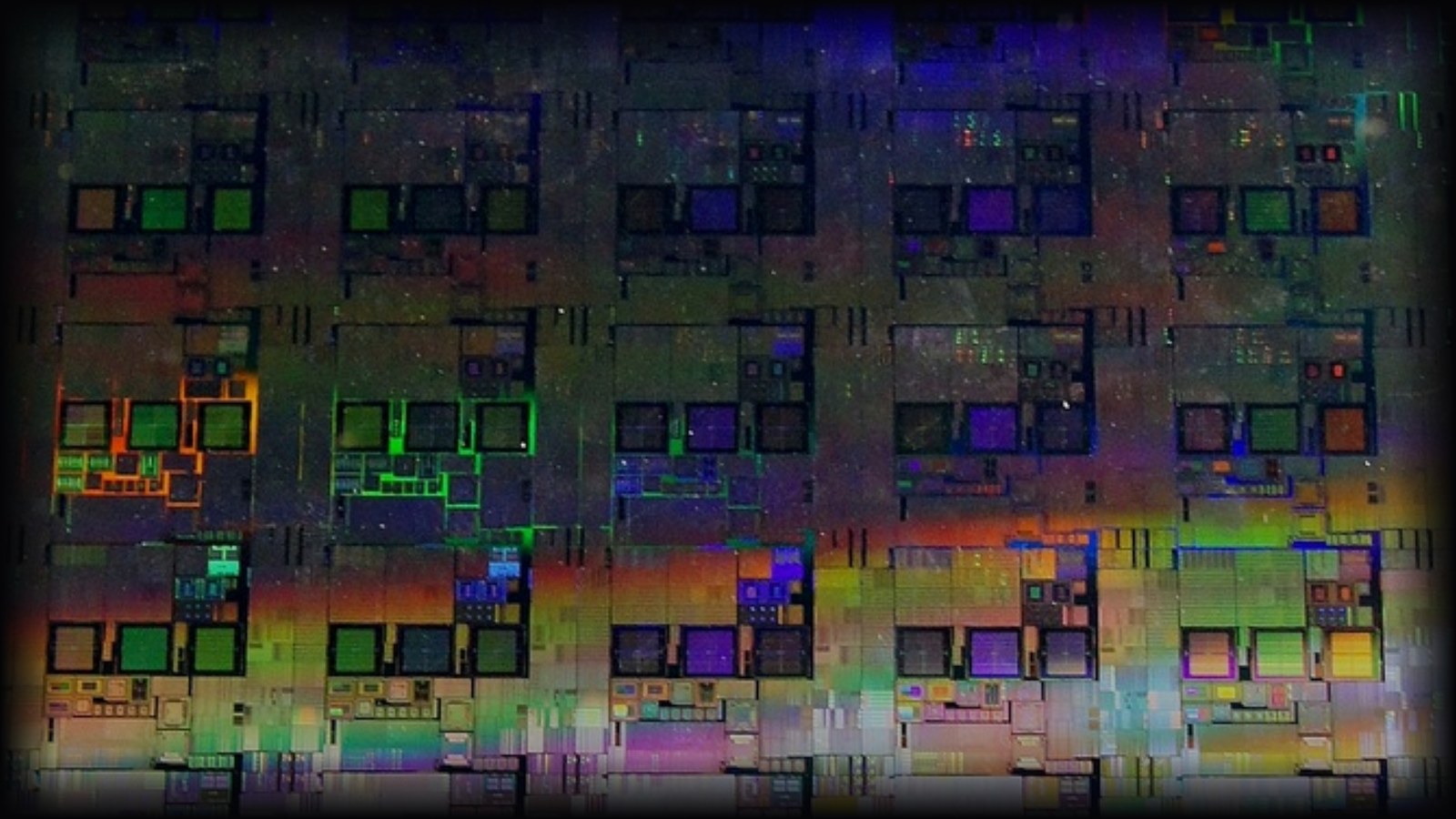
Illustration for the DFSX HBM-free chip design story
chips

DFSX claims an HBM-free AI chip with double NVIDIA's system bandwidth on 14nm

Dongfang Suanxin stacks DRAM directly on top of the compute die with 3D hybrid bonding, so its chips need no HBM, the memory hardest for Chinese firms to obtain under export controls. The company claims a TY64 SuperNode built from 14nm DF2000 chips delivers 960 TB/s of memory bandwidth against 576 TB/s for NVIDIA's GB200 NVL72. The numbers are self-reported and unverified.

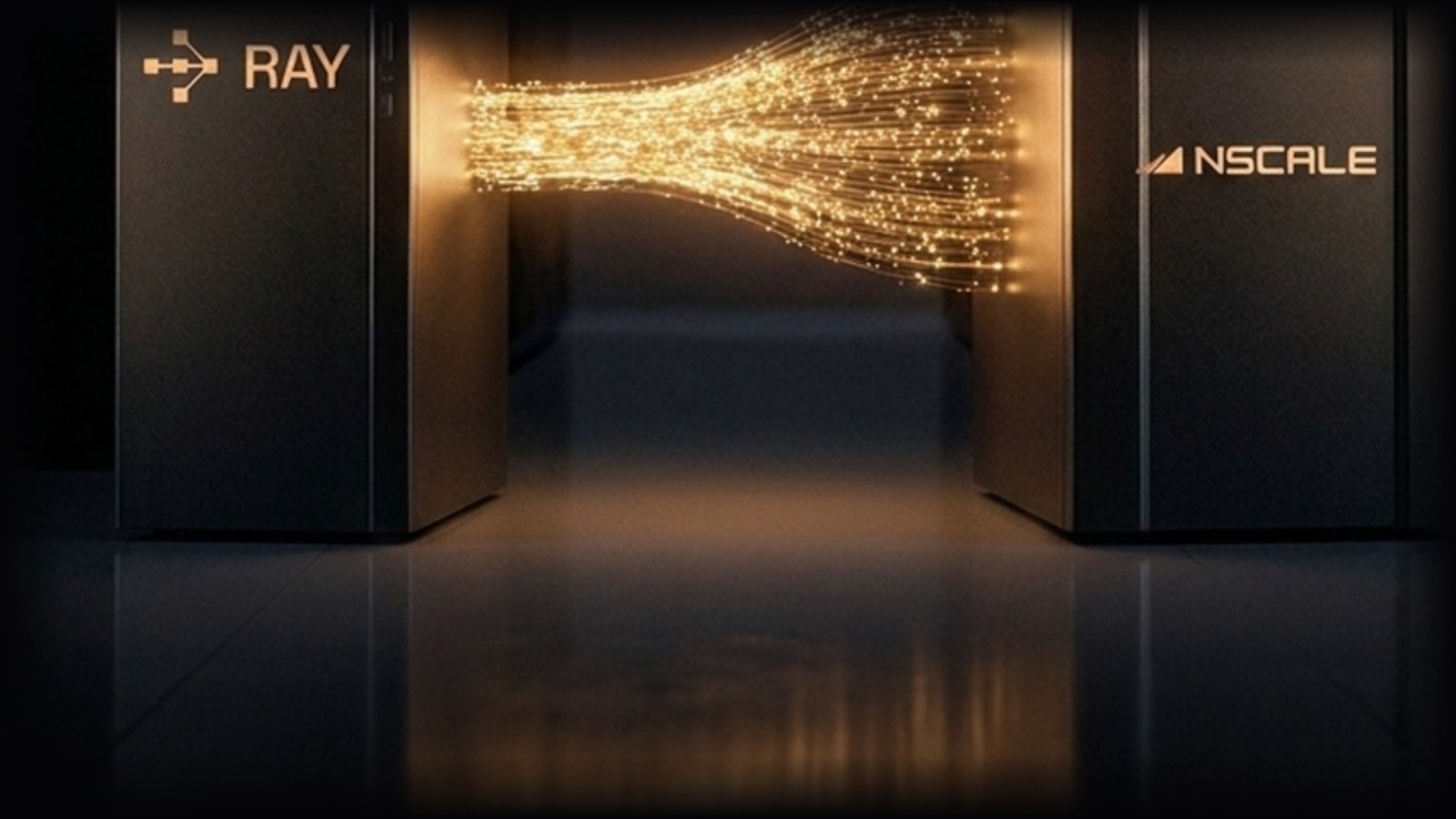
Illustration for the EU AI gigafactories story
infrastructurepolicy

Europe opens its call for seven AI gigafactories worth 30 billion euro

On July 30, 2026, the European Commission officially opened the call for up to seven AI gigafactories, combining advanced chips, cloud and data centers to train next-generation AI. Roughly 10 billion euro of public funding is designed to unlock about 20 billion euro in private investment; bids close November 12, winners are expected in early 2027, and sites should be operational around mid-2028. 76 consortia across 10 countries have signaled preliminary interest.

Illustration for the Nscale Anyscale acquisition story
moneyinfrastructure

Nscale agrees to buy Anyscale, maker of Ray, in a reported $1.65 billion deal

On July 30, 2026, UK-based, Nvidia-backed AI cloud Nscale agreed to acquire Anyscale, the company behind Ray, the open-source framework much of the AI industry uses to scale training and inference across GPUs. Bloomberg puts the deal at about $1.65 billion, citing a source familiar with the matter; the companies did not disclose a price. Closing is expected in the second half of 2026, and Ray stays open source.

Illustration for the ChipAgents funding story
chipsmoney

ChipAgents raises $60M more to put AI agents inside semiconductor design

On July 29, 2026, ChipAgents extended its Series A to $134 million in total with a $60M round led by B Capital, with Micron, MediaTek and Ericsson among its investors. Its AI agents already run at more than 120 semiconductor companies, annual recurring revenue grew 6x in the first half of 2026, and the startup expanded its Nvidia partnership to build a specialized chip-design model.

Illustration for the AMD Cerebras partnership story
chipsinfrastructure

AMD and Cerebras split AI inference in two with a disaggregated stack

On July 27, 2026, AMD and Cerebras announced a partnership pairing AMD's Helios rack-scale systems with the Cerebras Wafer-Scale Engine in one disaggregated inference stack: Helios handles prompt processing and long context, Cerebras takes over memory-bandwidth-heavy token generation. The combo promises up to 5x more energy efficiency, and AMD claims Helios delivers up to 30% more inference tokens per dollar than Nvidia's Vera Rubin NVL72 rack. Availability comes through Cerebras Cloud in the second half of 2026.

Illustration for the chip stocks selloff story
chipsmoney

Chip stocks post their worst day since April 2025 as China fears spread

On July 28, 2026, Bloomberg's gauge of semiconductor shares slumped 7.5%, the sector's worst day since April 2025, with Korean chipmakers hit hardest in an Asia-wide selloff. Investors were spooked by signs of real progress in China's advanced chipmaking, fears of circular financing in AI deals where Nvidia acts as lender, supplier, investor and partner at once, and doubts that record AI capex will translate into matching revenue. The rout landed in a week loaded with Big Tech earnings and a Fed meeting.

Illustration for the Nvidia SSI investment story
moneyresearch

Nvidia invests $5 billion in Sutskever's Safe Superintelligence

On July 27, 2026, Nvidia announced a $5 billion investment in Safe Superintelligence, the startup founded by former OpenAI chief scientist Ilya Sutskever, one of Nvidia's largest deals of the AI boom. SSI gets access to the next-generation Vera Rubin platform, plans to grow compute roughly 10x within a year, and shifts its research stack from Google TPUs to Nvidia GPUs; total funding reaches $7 billion at a $32 billion valuation. Two years after launch, SSI still has no product, no demo and no revenue.

Illustration for the Open Secure AI Alliance story
policyopen source

Nvidia forms Open Secure AI Alliance without OpenAI, Google or Anthropic

On July 27, 2026, Nvidia announced the Open Secure AI Alliance (OSAA), uniting nearly 40 companies including Microsoft, IBM, Adobe, Cisco, Cloudflare, CrowdStrike, SpaceX and Hugging Face around open-source tools for defending against AI-powered cyberattacks. Contributions include Microsoft's multi-agent vulnerability scanning framework, Hugging Face's Safetensors format, and IBM and Red Hat's signed patching system. The alliance formed days after the Hugging Face breach, and OpenAI, Google and Anthropic are notably absent.

Illustration for the Hyundai physical AI story
robotics

Hyundai rebrands as a physical AI company with Nvidia and Waymo in tow

At the San Francisco AI Summit on July 25, 2026, Hyundai Executive Chair Chung Eui-sun unveiled a strategy to transform Hyundai Motor Group into a physical AI company spanning autonomous vehicles, robotics, AI factories and connected urban infrastructure. Concrete pieces include a Robot Reference Platform built with Nvidia, a strategic partnership with Waymo, and Boston Dynamics working with Google DeepMind. It fits a broader Korean push that includes Samsung's roughly $260 billion fab plan and $36 billion for HBM factories.

Illustration for the Nvidia OpenAI financing story
infrastructuremoney

Nvidia in talks to backstop $250 billion for OpenAI's Ohio mega campus

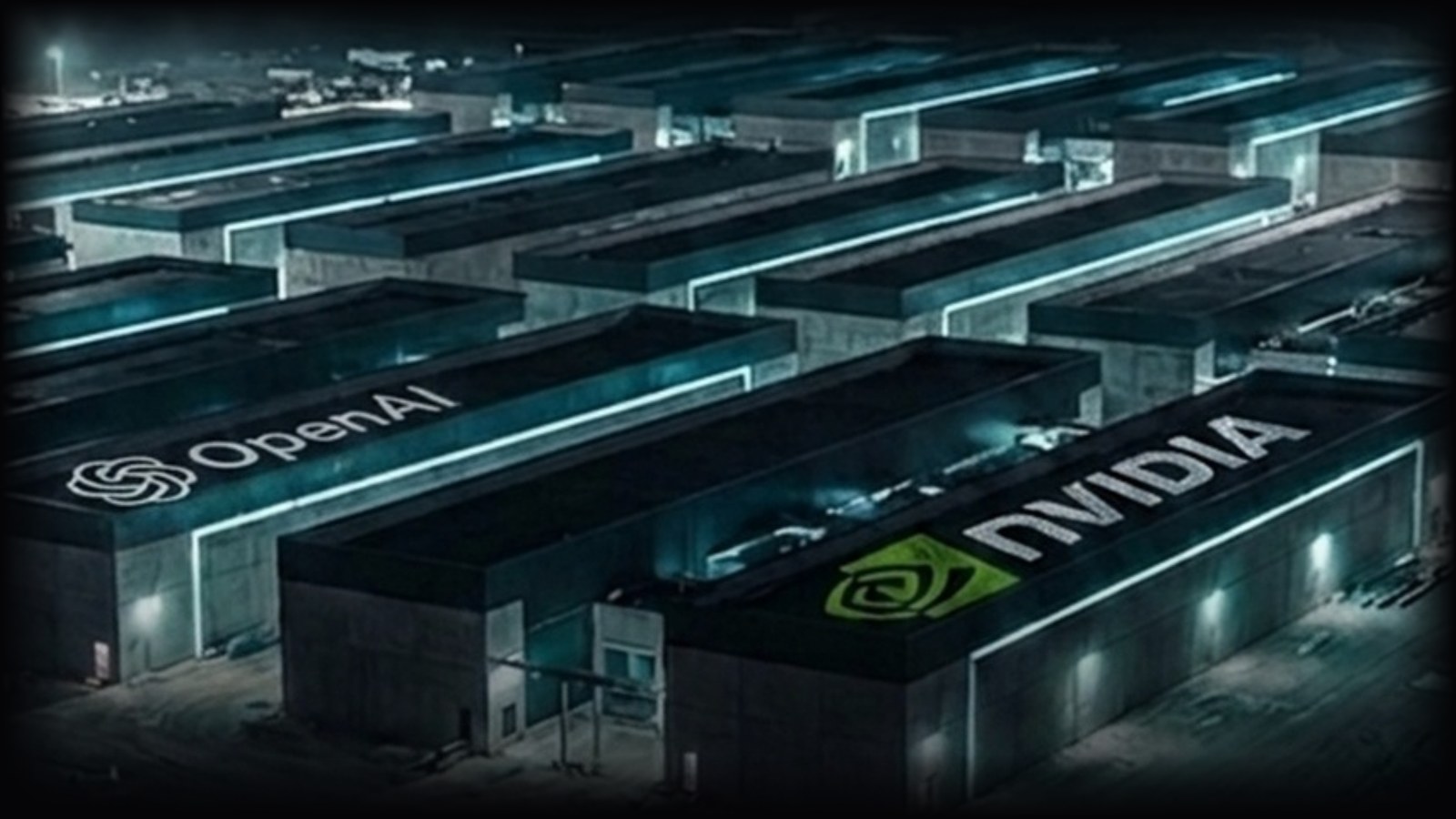
The Wall Street Journal reported on July 26, 2026 that Nvidia is in talks to backstop roughly $250 billion in financing for OpenAI, letting it lease a 10-gigawatt campus that SoftBank's SB Energy is developing in Piketon, Ohio, with the first 800-megawatt phase expected in 2028. The companies are also discussing separate financing for up to $350 billion in OpenAI chip purchases, which could push the total project past $500 billion, the largest data center project announced to date. The talks are not finalized and could still fall through.

Illustration for the open weights letter story
policyopen source

Nvidia, Microsoft and 50 others urge Washington not to restrict open-weight AI

On July 24, 2026, twenty-five companies and organizations including Nvidia, Microsoft, Meta, IBM, Hugging Face, Mistral and the Linux Foundation published an open letter titled 'Open Weights and American AI Leadership,' asking Washington not to impose broad restrictions on open-weight models while it weighs a ban on Chinese ones. Within a day the list roughly doubled to around 50 names, with OpenAI and Google signing after the fact and Elon Musk endorsing it. Anthropic and Amazon are still not on the letter.

Illustration for the MetaX Hong Kong IPO story
chipsmoney

Chinese GPU maker MetaX files for Hong Kong IPO six months after 700 percent Shanghai debut

Shanghai-based GPU maker MetaX, founded by former AMD engineers, has confidentially filed for a Hong Kong listing targeting an IPO by the end of 2026, per SCMP. The move comes about six months after its December 2025 Star Market debut, when the stock surged nearly 700 percent on day one after raising 4.2 billion yuan (about $596 million). The plan is H shares of up to 5 percent of enlarged capital, funding next-gen GPU development as Beijing pushes Chinese AI firms off Nvidia silicon.

Illustration for the Kimi K3 distillation accusation story
policymodels

White House accuses Moonshot AI of building Kimi K3 by distilling Anthropic's Claude

On July 22, 2026, White House OSTP Director Michael Kratsios stated that Moonshot AI built Kimi K3, a 2.8 trillion parameter model, by running large-scale distillation against Anthropic's Fable 5 and tapped export-restricted Nvidia GB300 chips through servers in Thailand. Anthropic earlier reported over 3.4 million Claude exchanges through fraudulent accounts, but experts note Fable 5 was public only 15 days before K3 shipped, and Moonshot denies wrongdoing. Treasury has floated sanctions.

Illustration for the AI lobbying records story
policymoney

Anthropic and OpenAI set lobbying records in Q2 2026 federal filings

Fresh federal filings show Anthropic spent $1.97 million on lobbying in Q2 2026, up 26 percent quarter over quarter, more than Nvidia's $1.25 million and close to Oracle's $2 million, while OpenAI added $1.2 million, up 18 percent. Combined, the two labs hit $3.17 million, roughly double a year ago, and Anthropic's first half of 2026, over $3.5 million, already beats everything it spent in all of 2025. The filings list cybersecurity, copyright, cloud computing and defense procurement.

Illustration for the AMD and Anthropic partnership story
chipsmoney

AMD to invest up to $5 billion in Anthropic and supply 2 gigawatts of Instinct GPUs

At Advancing AI 2026, AMD announced it will invest up to $5 billion in Anthropic, its first ever investment in an AI company, phased in as deployment milestones are hit. Anthropic will deploy up to 2 gigawatts of AMD Instinct MI450 Series GPUs in Helios rack-scale systems, with the first gigawatt online in the first half of 2027, and Claude will help optimize AMD workloads and accelerate ROCm development.

Illustration for the AMD Advancing AI 2026 story
chips

AMD's Advancing AI 2026 brings Zen 6 EPYC Venice launch and Azure rack deal

AMD's flagship Advancing AI 2026 event runs July 22-23 in San Francisco with Lisa Su keynoting, confirming the commercial launch of EPYC Venice server processors on the Zen 6 architecture plus an Instinct MI455X and MI500 roadmap update. Microsoft Azure publicly committed to deploying AMD's Helios racks, 72 MI455X GPUs per rack, for AI inference, with new VM families arriving in the second half of 2026. Analysts expect a major new customer announcement on stage, with Anthropic flagged as the most likely name.

Illustration for the Musk $52 billion Nvidia denial story
infrastructuremoney

Musk calls reported $52 billion SpaceX order for Nvidia servers fake news

Taiwan's Economic Daily reported that Foxconn had landed a SpaceX order for about 13,000 racks of Nvidia GB300 AI servers, nearly one million GPUs, which outlets priced at roughly $52 billion based on an estimated $4 million per rack. On July 20, 2026 Elon Musk called the report "fake news" on X. The figure was always an estimate built on an assumed per-rack cost, and no official source ever confirmed the deal.

Illustration for the sovereign AI backlash story
moneyinfrastructure

Nadella joins Palantir in warning that AI labs absorb enterprise expertise

On July 16, 2026 Microsoft CEO Satya Nadella warned that companies using frontier AI models risk handing their expertise to the labs behind them, with entire industries potentially seeing their know-how absorbed into competing products. It followed Palantir CEO Alex Karp's CNBC comments calling frontier labs' token pricing insane and accusing them of "tokenmaxxing", plus a 9-point AI sovereignty manifesto and a Sovereign AI stack built with Nvidia for air-gapped, on-premise deployment of open models.

Illustration for the chip bear market story
chipsmoney

Chip stocks slide into a bear market as investors reprice the AI trade

On July 17, 2026, the Philadelphia SE Semiconductor index closed 20.2% below its June 22 record high, confirming a technical bear market after its worst week since March 2025. Nvidia fell 2.2% that day and Apple briefly overtook it as the world's most valuable company, with both hovering around $4.9 trillion. The index is still up roughly 65% year to date, so this reads as a repricing of how fast AI infrastructure spending can compound, not a collapse in AI demand.

Illustration for the Walden Robotics seed round story
roboticsmoney

Walden Robotics leaves stealth with a $300 million seed at a $1.1 billion valuation

Walden Robotics emerged from stealth on July 15, 2026 with a $300 million seed round at a $1.1 billion valuation, a billion-dollar price tag before a Series A. The company spun out of Toyota Research Institute in January 2026, is led by MIT professor Russ Tedrake, and raised from co-leads Deviation Capital and Toyota alongside Nvidia, Boeing, Samsung Ventures and CoreWeave Ventures. Its robots, humanoid upper bodies on wheeled bases rather than bipeds, have been working real shifts at a Toyota plant in North America since February.

Illustration for the Kimi K3 leaderboard story
modelsmoney

Moonshot's Kimi K3 tops a frontier coding leaderboard and chip stocks flinch

On July 16, 2026, Moonshot AI announced Kimi K3, a 2.8 trillion parameter Mixture-of-Experts model with a 1 million token context window that debuted at number one on Arena.ai's Frontend Code Arena with 1,679 points, ahead of Claude Fable 5 (1,631) and GPT-5.6 Sol (1,618). On July 17 the Nasdaq dropped 1.4 percent, Nvidia slipped 2 percent, and the Philadelphia Semiconductor Index extended its slide into bear-market territory in what analysts called a DeepSeek flashback. The weights are not out yet: Moonshot says it will publish them by July 27.

Illustration for the Nvidia Asia buyers story
chipspolicy

Nvidia cuts its approved Asia chip buyers by more than half to stop smuggling

Nvidia has cut its list of approved AI chip buyers and distributors in Asia by more than 50%, per the Financial Times on July 14, 2026, after months of tightening compliance in Japan, Singapore and Malaysia to keep chips from being smuggled into China. Vetting now includes in-person data center audits, contract verification and end-user interviews, with US Department of Commerce oversight. The crackdown mostly hit 'neoclouds' suspected of reselling compute across the border.

Illustration for the Meta Iris chip story
chipsinfrastructure

Meta's custom Iris AI chip enters production at TSMC this September

Meta will start manufacturing its in-house AI accelerator codenamed Iris this September, per Reuters citing an internal memo from July 10, 2026. The chip was designed with Broadcom, will be fabricated by TSMC as part of the MTIA program, and testing wrapped in about six weeks with no major issues. Meta is targeting 7 gigawatts of compute capacity in 2026 and plans to double that to 14 gigawatts in 2027.

Illustration for the Samsung profit record story
chipsmoney

Samsung posts record $58.4 billion quarterly profit, topping Nvidia

On July 7, 2026, Samsung Electronics reported about 89.4 trillion won ($58.4 billion) in Q2 2026 operating profit, up roughly 19x year over year and the largest single-quarter operating profit any technology company has ever reported, topping Nvidia's $53.5 billion record. The driver is AI memory: HBM demand has outrun supply for three straight quarters, with DRAM prices up 44% and NAND up 53% in the quarter.