Nvidia's MotionBricks animates game characters and a humanoid robot from one model trained on 350,000 clips

One neural model, 350,000 motion skills, 15,000 frames per second, no fine-tuning. Nvidia’s SIGGRAPH demo replaces a discipline’s worth of animation tooling with a single network.
What MotionBricks is
NVIDIA Research unveiled MotionBricks at SIGGRAPH 2026. It is a single universal character-animation controller trained on BONES-SEED, a dataset of 350,000 production motion-capture clips. From that training it generates any combination of locomotion, interaction and physics-driven movement in real time, at 15,000 FPS with 2 ms latency.
What it does not need is the point. No hand-crafted state machines. No manual transition graphs. No per-character fine-tuning. Those three items are a large share of what a game studio’s animation pipeline consists of, and MotionBricks is positioned as a replacement for all of them.
The demos
In the Unreal Engine 5 demonstration, a developer typed natural-language commands, “sit on the bench, stand up, pick up the sword, jump over the railing,” and MotionBricks generated all the intermediate motion live. The transitions between those actions, normally authored by hand or stitched through a transition graph, came out of the model.
The second demo is the one with wider implications. The same model drives the Unitree G1 humanoid robot through NVIDIA GR00T. Game animation and physical AI are running on one network: the motion that makes a character look natural on screen is the motion that moves a robot’s limbs.
What it displaces, and what remains open
Animation pipelines are the kind of infrastructure studios spend years building, with state machines and transition logic tuned per character. A single pretrained motion model that runs on a consumer GPU and takes text commands removes most of that work. Learned motion has been a research demo for years; the SIGGRAPH showing and the Unreal Engine 5 integration are an argument that it now ships.
The unanswered questions are the usual ones for a research unveiling: how it handles characters and rigs far from the training distribution, how much control animators retain over style, and what availability and licensing look like for studios. The humanoid demo raises a further one, which is how much of robot motion control will end up sharing infrastructure with game animation. On the evidence of this demo, Nvidia’s answer is most of it.
Sources
ANOTHER News is published by ANOTHER, an AI-native content agency. Daily coverage also runs on Instagram.
Related

Anthropic's risk report discloses an unreleased Model 2 more capable than Mythos 5
Anthropic's August 2026 Risk Report, published August 14 with a coverage date of July 15, introduces an unreleased internal system it calls Model 2 and describes it as "somewhat more capable than Mythos 5," a "noticeable improvement on Mythos 5 for many tasks relevant to internal use" though not a jump on the scale of Claude Opus 4.6 to Mythos Preview. The report states: "We do not currently have plans to release this model externally, and have not run all of our typical suite of predeployment assessments, so we have somewhat lower confidence in our beliefs about its capabilities." Model 2 and Mythos 5 are "used heavily within Anthropic for coding, data generation, and other agentic use cases," and Claude "authors a large majority of the code merged into our production codebases." The report also raised the company's own misalignment risk assessment from very low to low.
Unitree says its Superman humanoid hit 12.66 m/s, faster than Usain Bolt, two days before its IPO
Unitree revealed a humanoid robot it calls Superman on August 17, 2026 in a 30-second video, claiming a top speed of 12.66 meters per second, above the 12.42 m/s peak Usain Bolt reached inside his 2009 world record, and a two-meter standing jump against a human best of roughly 1.2 meters. The video's overlay puts the robot's leg length at 0.85 meters. Unitree says the progress came in a little over three months: at the first World Humanoid Robot Games in Beijing in August 2025 its fastest run was 4.78 m/s. None of the figures were timed by an independent body. The Hangzhou company begins trading on Shanghai's STAR Market on August 19 after raising 6.1 billion yuan, about $904 million.
Two six-foot humanoid robots scored a double knockout at REK2 in San Francisco
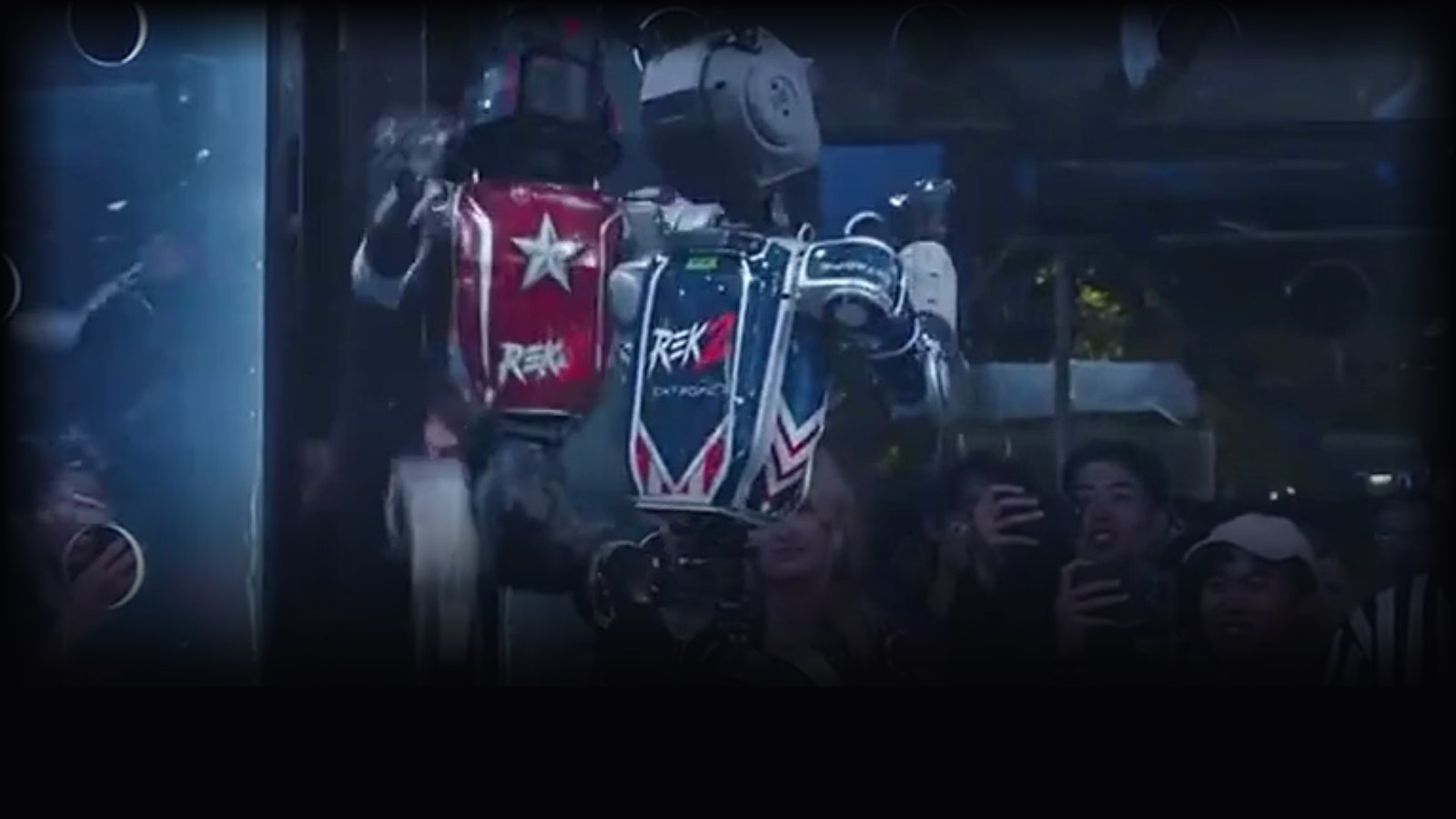
REK2 ran on the evening of August 15, 2026 at REK's San Francisco headquarters, billed by REK as the first six-foot humanoid robot fight in US history and streamed live on X. The machines are EngineAI T800 humanoids, roughly 1.73 m and 75 kg, each teleoperated in real time by a human in a VR rig. In the final, both robots went down in the same exchange; one stood back up, and the Japanese pilot listed as Osone took the title, his second REK win in a row, according to Japanese outlet Denfaminicogamer. REK posted the moment with the words "INSANE DOUBLE KNOCKOUT." EngineAI is based in Shenzhen; on July 29 the FCC banned new imports of foreign-made humanoid robots on national-security grounds.