Seoul researchers built a liquid robot that squeezes through bars, splits and merges back into one
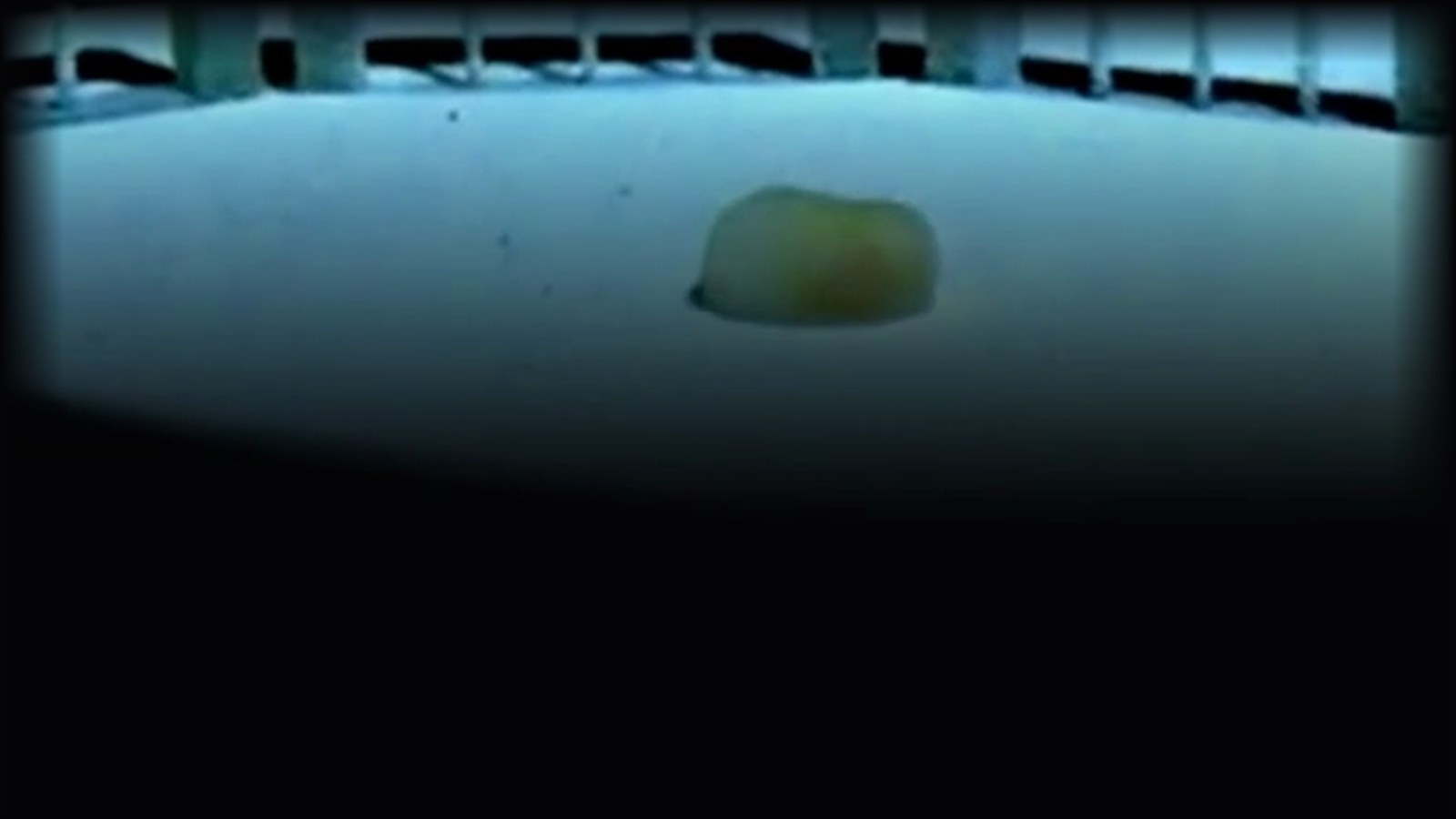
A robot made of water that squeezes through metal bars, splits in two and merges back into one, on camera and without CGI.
What the paper describes
Seoul National University and Gachon University published the “particle-armored liquid robot” in Science Advances on March 21, 2025. The design is a water droplet coated in unusually dense hydrophobic particles. The coating gives the droplet the structural stability of a solid while the water inside keeps the deformability of a liquid, which is the combination that makes the demonstrations possible.
In those demonstrations the robot passes through bars, engulfs and carries objects, moves across both water and solid surfaces, and survives heavy compression and drops. Two robots carrying different substances can merge, triggering a reaction inside the combined droplet. Movement is regulated with ultrasound, and the team is working on sound waves and electric fields for shape control.
The authors are Ho-Young Kim, Jeong-Yun Sun and Keunhwan Park, with Hyobin Jeon as first author.
The Terminator comparison, and its limits
The researchers make the pop-culture comparison themselves: the T-1000 from Terminator 2, the liquid machine that flows through obstacles and reassembles. The footage earns it. The differences are scale and purpose. This robot is millimeters wide, and its intended jobs are drug delivery and cell-level tasks inside the human body, not pursuit.
That purpose explains the feature list. Passing through narrow gaps, carrying a payload, surviving compression and merging with a second droplet to start a reaction are the operations a drug-delivery vehicle would need inside tissue. The ultrasound steering fits the same use, since it is a control signal that can reach inside a body without contact.
Why it matters for robotics
A conventional robot, rigid or soft, is built from parts with defined shapes. This design has no parts in that sense. It is a contained volume of liquid whose shape is whatever the task requires at the moment, held together by a particle shell rather than a frame.
The work is a 2025 paper, not a product, and the control methods beyond ultrasound are still in development by the team’s own account. But if shape control by sound waves and electric fields matures as intended, the next generation of small medical robots may have no joints at all, and the choice between rigid and liquid body plans inside the body becomes an engineering decision rather than a science-fiction premise.
Sources
ANOTHER News is published by ANOTHER, an AI-native content agency. Daily coverage also runs on Instagram.
Related

Anthropic's risk report discloses an unreleased Model 2 more capable than Mythos 5
Anthropic's August 2026 Risk Report, published August 14 with a coverage date of July 15, introduces an unreleased internal system it calls Model 2 and describes it as "somewhat more capable than Mythos 5," a "noticeable improvement on Mythos 5 for many tasks relevant to internal use" though not a jump on the scale of Claude Opus 4.6 to Mythos Preview. The report states: "We do not currently have plans to release this model externally, and have not run all of our typical suite of predeployment assessments, so we have somewhat lower confidence in our beliefs about its capabilities." Model 2 and Mythos 5 are "used heavily within Anthropic for coding, data generation, and other agentic use cases," and Claude "authors a large majority of the code merged into our production codebases." The report also raised the company's own misalignment risk assessment from very low to low.
Unitree says its Superman humanoid hit 12.66 m/s, faster than Usain Bolt, two days before its IPO
Unitree revealed a humanoid robot it calls Superman on August 17, 2026 in a 30-second video, claiming a top speed of 12.66 meters per second, above the 12.42 m/s peak Usain Bolt reached inside his 2009 world record, and a two-meter standing jump against a human best of roughly 1.2 meters. The video's overlay puts the robot's leg length at 0.85 meters. Unitree says the progress came in a little over three months: at the first World Humanoid Robot Games in Beijing in August 2025 its fastest run was 4.78 m/s. None of the figures were timed by an independent body. The Hangzhou company begins trading on Shanghai's STAR Market on August 19 after raising 6.1 billion yuan, about $904 million.
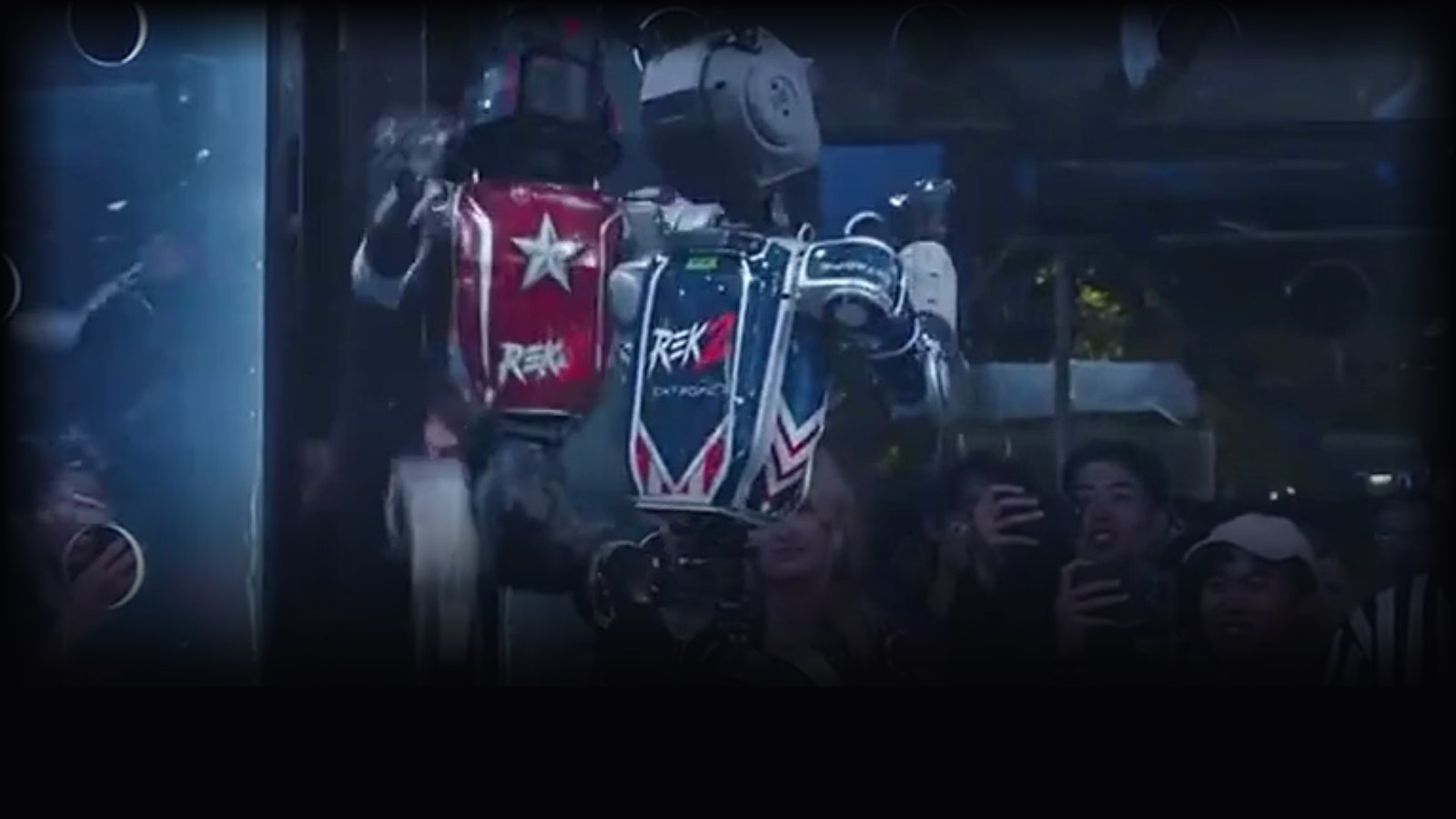
Two six-foot humanoid robots scored a double knockout at REK2 in San Francisco
REK2 ran on the evening of August 15, 2026 at REK's San Francisco headquarters, billed by REK as the first six-foot humanoid robot fight in US history and streamed live on X. The machines are EngineAI T800 humanoids, roughly 1.73 m and 75 kg, each teleoperated in real time by a human in a VR rig. In the final, both robots went down in the same exchange; one stood back up, and the Japanese pilot listed as Osone took the title, his second REK win in a row, according to Japanese outlet Denfaminicogamer. REK posted the moment with the words "INSANE DOUBLE KNOCKOUT." EngineAI is based in Shenzhen; on July 29 the FCC banned new imports of foreign-made humanoid robots on national-security grounds.