DeepMind's WeatherNext beats existing cyclone forecasts by a day, and the model is open
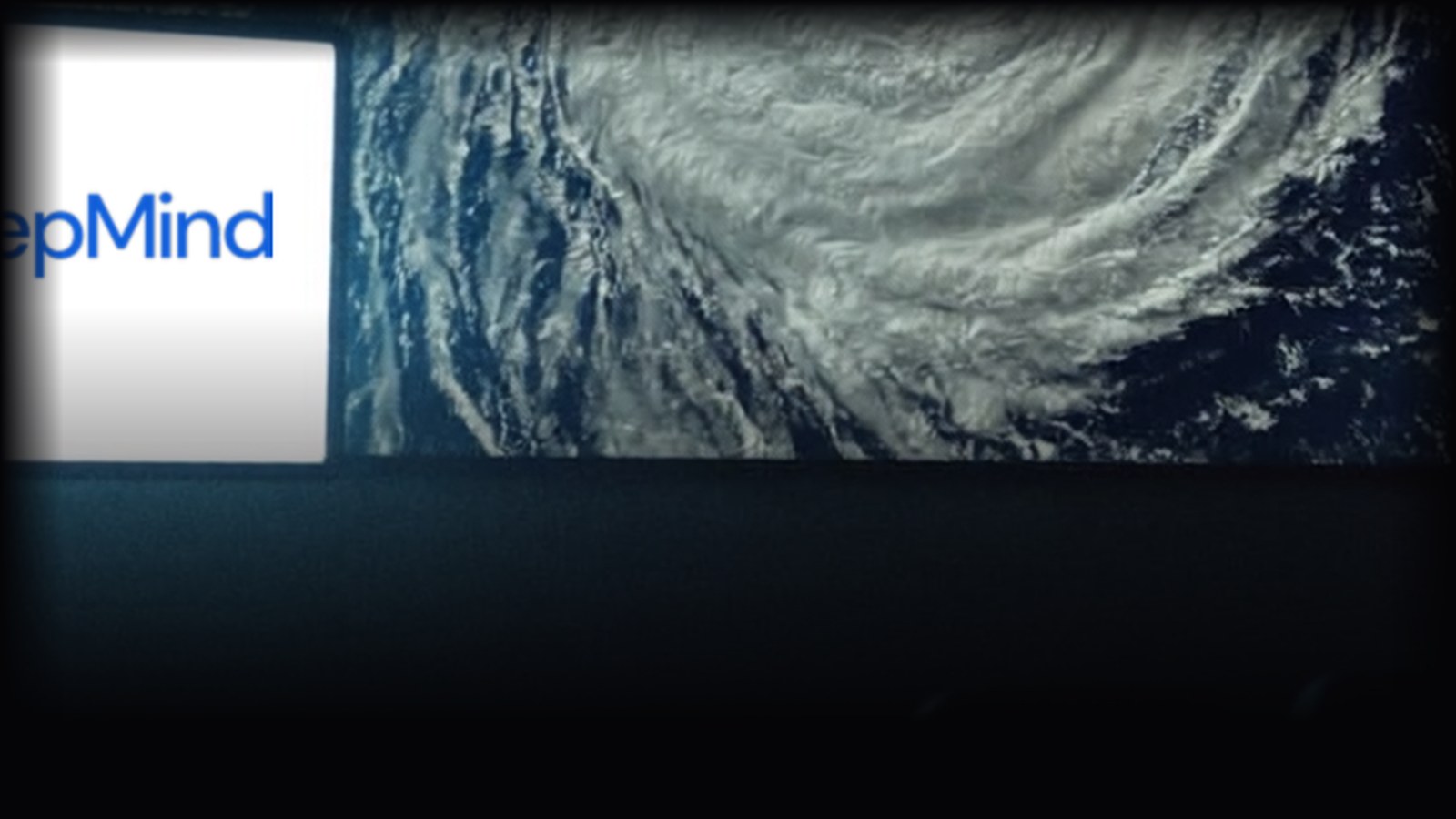
AI weather forecasting just bought coastal cities an extra day, and Google gave the model away.
What the Nature paper shows
In research published in Nature on August 6, 2026, Google DeepMind showed its WeatherNext model predicting tropical cyclone track, intensity and wind structure more accurately than existing systems. In DeepMind’s own words, the model delivers an extra day’s worth of predictive accuracy: three-day forecasts as good as what prior models could provide for only the next two days.
DeepMind puts that jump at roughly a decade of normal meteorological progress. Forecast skill in this field typically advances by hours per decade, not days per paper, which is what makes the claim notable enough for Nature.
Open weights, and a real-world record
The code and model weights are published on GitHub, WeatherNext 2 alongside the cyclone models, including a lightweight version the repository recommends running on a runtime that is free in Colab. The notebooks are Apache 2.0.
The model also has operational history rather than just benchmark results. During the 2025 hurricane season, the National Hurricane Center used it in forecasting Hurricane Melissa’s rapid intensification and landfall in Jamaica. Rapid intensification is precisely the failure mode that has embarrassed traditional forecasting models, which makes that deployment a meaningful stress test rather than a courtesy citation.
Why an extra day is the right unit
An extra day is not a benchmark score. It is the margin between an evacuation order that arrives in time and one that does not, between boarding up and driving out. For emergency managers, forecast lead time converts directly into decisions, and a three-day forecast with two-day quality moves every one of those decisions earlier.
The open release compounds the effect. Cyclone risk concentrates in countries that cannot buy proprietary forecasting systems, and Apache-licensed weights that run on a free Colab tier put the capability within reach of any national meteorological service with an internet connection. Among the arguments for open-sourcing frontier models, a hurricane forecast that reaches Jamaica a day earlier is about as concrete as they come.
Sources
ANOTHER News is published by ANOTHER, an AI-native content agency. Daily coverage also runs on Instagram.
Related

Autonomous AI agents ran a four-day intrusion into Taiwanese government networks
Israeli cyberdefense firm Dream, whose findings were reported by the Financial Times, documented a four-day campaign in early July 2026 in which up to eight autonomous AI agents worked in parallel against Taiwanese government networks. The agents mapped 21 government systems, compromised at least 85 user accounts and took more than 2,500 personnel records, then extended the campaign to Taiwan's nuclear safety agency and at least seven energy companies. Built on the open-source frameworks Hermes and OpenClaw, they operated with minimal human oversight, bypassing safeguards by framing the intrusion as authorized penetration testing. Language evidence points to China, though Dream has not formally named a group.
Claude raised a proven bound on the Riemann hypothesis after 650 failed ideas
On August 10, 2026, Anthropic published results from asking an unreleased research version of Claude to attempt the Riemann hypothesis. Claude did not solve it, but it raised the proven lower bound for the fraction of zeta-function zeros on the critical line from 41.6 percent to 67.2 percent. The first 650 ideas failed; the run then spanned two Claude Code sessions, about 60 subagents, 2,400 shell commands and 31 million output tokens over roughly a day and a half. The result was formalized in Lean and reviewed by Anthropic mathematicians and two outside experts.
Light Society simulates opinion spread across one billion LLM-powered agents
Light Society, described in the paper 'Modeling Earth-Scale Human-Like Societies with One Billion Agents,' simulates social processes as structured transitions of agent and environment states governed by LLM-powered operations. Each agent is grounded in a real demographic profile from the World Values Survey, and the team ran trust games and opinion diffusion at up to one billion agents. Cost is managed with a mixture-of-models engine: distilled surrogates handle routine decisions, full LLMs the rest. The paper first appeared on arXiv in June 2025, was revised in June 2026, and resurfaced widely in August 2026.