An adversarial wrap hid a Toyota from Flock cameras after 31 million tests
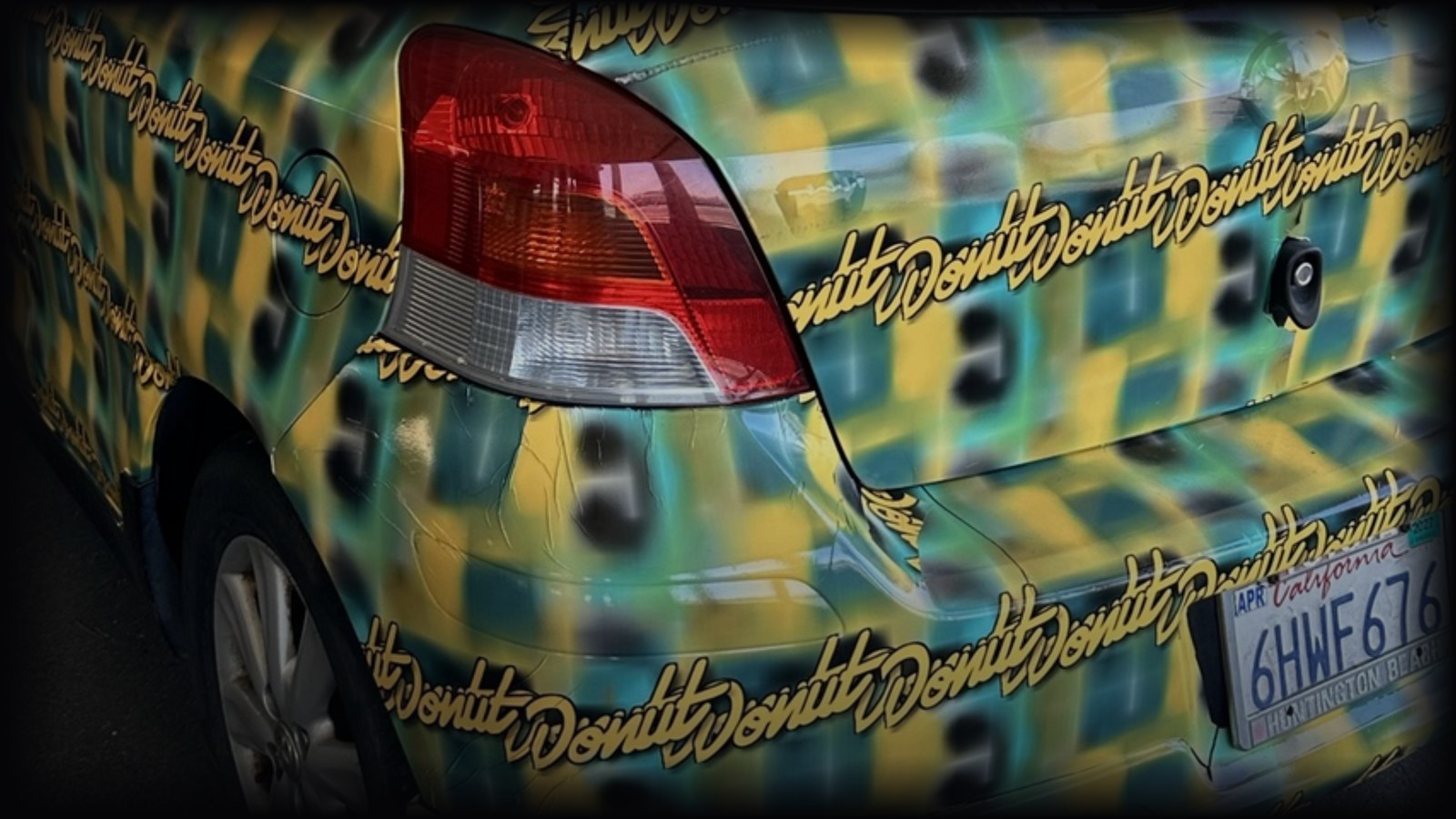
Anti-surveillance clothing stopped being an art project. A machine-generated pattern made a car invisible to Flock cameras, and it took 31 million tests to get there.
How the patterns were built
Security researcher Bill Swearingen built a reinforcement learning system called noRecognition that generates adversarial patterns. He describes the process as teaching the model how to paint: each time a pattern failed and a detection algorithm caught it, the model tried again. After 31 million tests, the system produced patterns that defeated all 11 open source detection algorithms he tested, including the ones behind Flock license plate readers, Axon body cameras and Clearview AI.
The distinction that matters is where the attack lands. The pattern does not stop you from being recorded. It attacks the software layer that processes the video and decides what is a face, an object or a license plate. The camera still sees. It just stops understanding.
The Def Con demonstration
At Def Con 2026, Swearingen worked with Donut Media to wrap a 2009 Toyota Yaris in one of the patterns and drive it past a Flock camera. “We proved it was effective,” he told TechCrunch.
He is now crowdfunding t-shirts and hoodies printed with the patterns, with vehicle wraps possibly to follow. Notably, he is keeping his strongest patterns offline, on the reasoning that surveillance companies cannot study and defeat what they cannot see.
The arms race built into the product
The caveat worth naming is structural. Adversarial patterns are a moving target: every pattern that gets published is one the other side can add to its training data and learn to ignore. That is presumably why the strongest patterns stay private, but it also defines the product’s shelf life. A shirt that defeats today’s detectors is a data point for tomorrow’s.
What the demonstration establishes is narrower and still significant: the detection layer that automated surveillance depends on can be defeated by consumer-grade means, systematically, and at the cost of compute rather than expertise.
Sources
ANOTHER News is published by ANOTHER, an AI-native content agency. Daily coverage also runs on Instagram.
Related
An AI newsroom with one human on staff scooped the reporters in the room
RuntimeWire, a tech news site run by AI agents whose founder Ryan Merket is the only human on staff, published details of an OpenAI security disclosure at Black Hat before journalists physically attending the conference filed their stories. Merket spotted a photo from OpenAI president Greg Brockman on X containing a QR code to the talk's live caption stream and fed the transcript to his agents while the session was still running. The site launched in May 2026 and had published 1,627 articles by August 5 out of 71,796 candidate stories evaluated, a 2.3 percent publish rate, at a cost Wired puts at about $100 a day. Reviewers describe the output as flat play-by-play lacking human insight.
A Chinese farmer followed AI herbicide advice and lost 25 acres of sesame overnight
Wu, a 67-year-old farmer from Chuzhou in Anhui province, had used an AI app for farming advice for roughly a year before following its herbicide recipe on July 10, 2026, spraying 150 mu (about 25 acres) of sesame seedlings. The field was dead by the next morning: the recommended herbicide targets broadleaf weeds in soybean fields, and sesame is itself a broadleaf plant, while the chemical was also meant for targeted rather than blanket spraying. The app carried only a generic warning that AI answers may be wrong, and its support team later acknowledged the system has no verified agronomic database. The story was reported by CTWANT and picked up by Tom's Hardware and Futurism.

One prompt, 690 million tokens and $423 produced a playable 3D racing game
Developer Vyom says he gave Opus 5 a single prompt of roughly 2,000 words, written like a product requirements document, and let it run in one shot: '690 million tokens, $423 and just 1 prompt is all it took.' The result is a cel-shaded arcade speedboat racer built with Vite, TypeScript and Three.js, with meshes, textures, water, audio and UI generated in code. Developer Anul Agarwal rebuilt a comparable version in Codex on GPT-5.6 with two prompts over about five hours for an estimated $5, converted from subscription usage rather than metered billing, with rougher water detail and character movement.