A 52-year-old lost 9 kg by letting Claude plan every family meal, portion and shopping list

A 52-year-old on r/ClaudeAI lost 9 kg this summer by giving Claude exactly one job: decide what his family eats. The assistant plans every meal, writes the shopping lists, sets his portions and logs everything to his calendar. His summary: “It never felt like a diet.”
How the setup works
The account is first-person and unverified beyond the author’s own report, but the mechanics he describes are concrete and repeatable in an evening.
The ingredients are modest. Recipes live in a folder the AI can read. His stats and goals are written down once. A Bluetooth scale supplies the weight data. From there the assistant produces the meal plan, the shopping list, the portion sizes and the calendar entries, and the author eats what it puts in front of him.
The real work, by his account, was not the tooling. It was writing down the rules he had previously been renegotiating with himself every day: meals at fixed times instead of in response to hunger cues, portion ceilings treated as hard maximums rather than targets, and one instruction that matters more than it sounds, never suggest seconds.
What changed, and what did not
He says he eats more than before and better than before, calzones included. The weight came off without the experience of restriction, because the decisions that used to require willpower at the table had already been made, in writing, somewhere else.
That is the interesting part of the story, and it has little to do with the model’s intelligence. Nothing in the setup asks Claude to know more about nutrition than a competent human planner. What it does is hold the line on rules the author had already chosen, at the moment he would otherwise have argued himself out of them.
The principle
AI does not add willpower. It removes negotiation. A rule written once and enforced by a system is stronger than a decision that has to be remade every day, because the daily version is the one that gets worn down. The meal planner works for the same reason a fixed schedule or a pre-committed budget works, with the difference that the enforcement is automated and the plan adapts to what is in the recipe folder and on the scale.
That framing also marks the limits of the result. The outcome depends on rules the author wrote for himself, and on his willingness to keep following the plan the system produces. The assistant is the enforcement layer, not the source of the discipline, and a different set of written rules would produce a different outcome.
Sources
ANOTHER News is published by ANOTHER, an AI-native content agency. Daily coverage also runs on Instagram.
Related

3M's paid expert asked ChatGPT to show the company was 0% at fault, and the jury read the prompts
In the lawsuit over the January 2020 Watson Grinding explosion in Houston, which killed three people and damaged or destroyed hundreds of homes, plaintiffs' attorney Will Moye found a five-page "Citation Overlay" in 3M's defense materials and forced production of about 350 pages of ChatGPT prompts written by expert witness Josh Autenrieth of engineering firm KnightHawk, which 3M paid roughly $90,000. Prompts included "create an exceptional expert witness report defending the standard of care at 3M" and "show how 3M is 0% at fault for the explosion at Watson Grinding." Trial testimony put the finished report at 85 to 90 percent chatbot output; Autenrieth, billing $475 an hour, said the AI drafted "a straw man to build off of." On August 11 the Harris County jury awarded $61.5 million and assigned 30 percent of fault to 3M and 70 percent to Watson Grinding. 404 Media first reported the story from the court record.

OpenAI launches a separate ChatGPT for teens that asks guiding questions instead of giving answers
On August 18 OpenAI launched a separate ChatGPT experience for 13 to 17 year olds, rolling out globally on Free and paid personal plans. Its Study Mode responds to a problem with guiding questions and step-by-step prompts rather than a finished solution, a Study Hours setting can make that the default during set times, and quizzes and reminders push toward working the problem. Minors are routed to the teen experience automatically, with stronger defaults around self-harm, violence, eating disorders, dangerous activities and explicit content. Parents can link an account and set limits through opt-in parental controls, but cannot read their teen's chats. TechCrunch and Axios reported the launch and noted that teenagers have been using ChatGPT for schoolwork for three years.
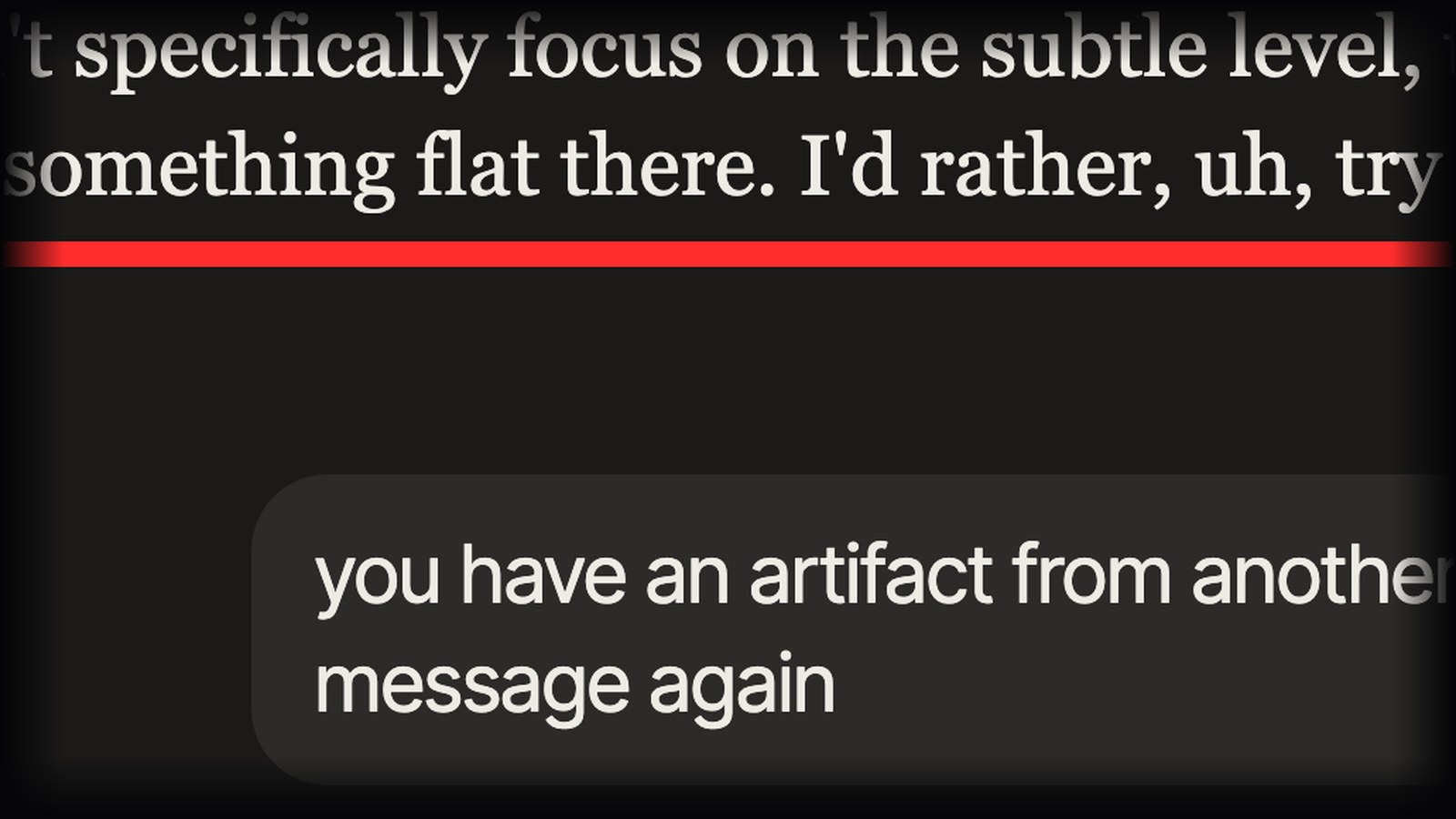
A Claude user reports paragraphs from other people's chats appearing in her replies, twice
A Claude user reports that, while asking about a breathing practice, the model's reply contained a new paragraph that began with the word "user," read like a transcribed voice message from a different person, and which she says she never wrote. She says the same thing happened earlier in a chat about a home renovation, when other people's renovation stories appeared in Claude's answers. When she pointed it out, Claude agreed it saw the pattern and also said a leak between accounts is impossible because user data does not cross; that is the model's self-description, not a statement from Anthropic. She has filed a bug report. The screenshots were shared directly; the original chat is in Russian and the quoted text is machine-translated. This remains one user's report, not a confirmed cross-account leak.